The Isabella Stewart Gardner Museum Heist: The $500 Million Art Crime That Remains Unsolved
Introduction: The Empty Frames That Haunt Boston
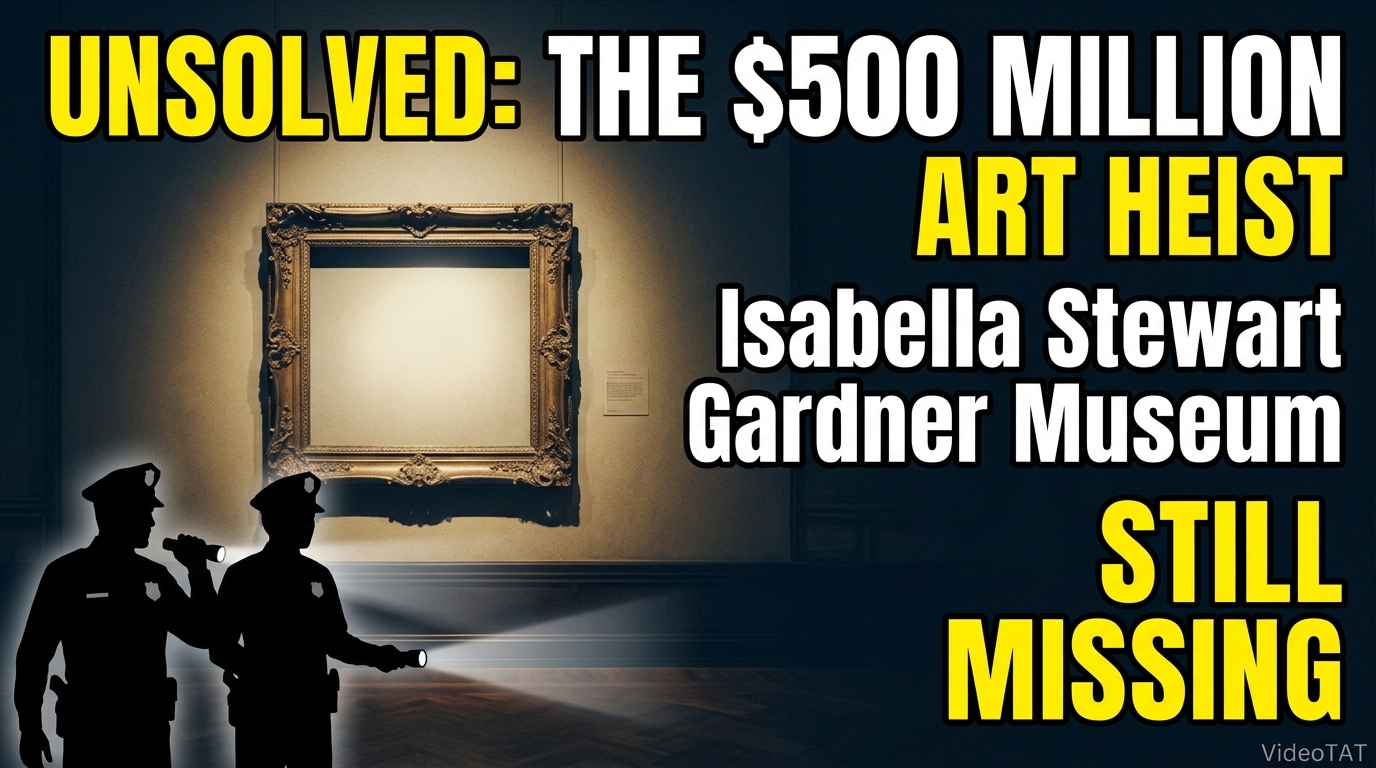
In the dead of night, two men posing as police officers talked their way into one of America’s most beloved museums. They claimed to be responding to a disturbance. Within ninety minutes, they had walked out with $500 million worth of masterpieces—including the only known seascape by Rembrandt, a Vermeer so rare that fewer than three dozen exist worldwide, and five works by Degas.
The Isabella Stewart Gardner Museum in Boston never got its art back.
To this day, the empty frames still hang on the walls—a silent, deliberate memorial to what was lost. And the reward money, which has grown to $10 million, remains completely unclaimed.
Below, we update this legendary cold case for a modern audience, breaking down how the heist happened, why the art has never been recovered, and what the empty frames represent in an era of digital asset tracking and blockchain provenance.
Part 1: The Target – A Museum Unlike Any Other
The Isabella Stewart Gardner Museum: A Venetian Palace in Boston
Built to resemble a 15th‑century Venetian palazzo, the Gardner Museum is not a typical art institution. Its founder, Isabella Stewart Gardner, decreed that nothing be moved, rearranged, or added after her death. Every painting, chair, and vase sits exactly where she placed it.
That includes the empty frames.
Why the Museum Was Vulnerable:
- No central alarm system at the time – individual galleries had motion sensors, but they were often disabled.
- Underfunded night security – a single guard at the entrance, another monitoring basic cameras.
- Location in a quiet neighborhood – police response times were slower than in downtown Boston.
- Trust in uniforms – the museum trained staff to cooperate with law enforcement.
For a pair of confident, well‑rehearsed thieves, the Gardner was less a fortress and more a library with priceless books left open on the tables.
Key Keywords (Context):
- Isabella Stewart Gardner Museum heist
- Largest art theft in history
- Boston museum robbery unsolved
- $500 million stolen artwork
- Empty frames at Gardner Museum
Part 2: The Heist – How Two Guards Were Fooled
The Disguise: Police Officers Responding to a Call
Around 1:00 AM, two men in fake police uniforms rang the museum’s side entrance. They told the security guard they were investigating a disturbance. Against protocol, the guard unlocked the door.
Once inside, the thieves handcuffed both guards, taped their faces and wrists, and locked them in the basement. The entire interaction was calm, almost professional.
By the Numbers:
- Time inside the museum: Approximately 81 minutes
- Number of thieves: 2 (plus possibly lookouts)
- Number of guards on duty: 2
- Injuries: None
- Alarms triggered: None
- Artworks stolen: 13 pieces
- Empty frames left behind: 13
What Was Taken? The Masterpieces That Vanished
The thieves bypassed more valuable but less portable works. They focused on easily removable, iconic pieces:
| Artwork | Artist | Estimated Value (Today) | Why It’s Priceless |
|---|---|---|---|
| The Concert | Johannes Vermeer | Over $250 million | One of fewer than 36 Vermeers in existence |
| Christ in the Storm on the Sea of Galilee | Rembrandt van Rijn | Over $100 million | Rembrandt’s only known seascape |
| A Lady and Gentleman in Black | Rembrandt | Over $50 million | Rare double portrait |
| The Picnic | Édouard Manet | Over $30 million | Influential Impressionist work |
| Five works by Degas | Edgar Degas | Over $50 million total | Includes pastels, drawings, and a monotype |
| Landscape with Obelisk | Govert Flinck | Over $10 million | Formerly attributed to Rembrandt |
| A bronze eagle finial | Napoleonic era | $500,000+ | Historical artifact |
| A Chinese bronze gu | Ancient China | $500,000+ | Over 2,000 years old |
Total loss: Approximately $500 million – making it the largest property theft in history.
Part 3: The Aftermath – Empty Frames as a Memorial
Why the Frames Remain on the Wall
Following Isabella Stewart Gardner’s strict will, the museum cannot rearrange or add to the collection. The empty frames still hang in the Dutch Room and other galleries, exactly where the paintings once rested. For visitors, they serve as:
- A haunting reminder of the loss
- A silent challenge to the thieves
- A living crime scene that never closes
Each empty frame is labeled with the missing artwork’s name. It is one of the most emotional and unforgettable exhibits in any museum worldwide.
The Investigation: The Largest Art Crime Hunt Ever
The FBI, Boston Police, and international art recovery units have pursued thousands of leads across more than a dozen countries. The case has involved:
- Mob informants – Tipped that the art was used as collateral by organized crime.
- Undercover stings – FBI agents posing as buyers in hotel rooms.
- Deathbed confessions – Several suspects have named accomplices, but no art has surfaced.
- Recovery attempts in Ireland, France, and Japan – All dead ends.
Key Keywords (Investigation):
- Gardner Museum FBI investigation
- Boston art heist cold case
- $10 million reward unclaimed
- Stolen Rembrandt and Vermeer
- Empty frames memorial
Part 4: The Reward – $10 Million That No One Has Claimed
The Growing Reward
The Isabella Stewart Gardner Museum has offered a $10 million reward for information leading to the return of all 13 works—in good condition. That is the largest private reward in history for stolen art.
Why No One Has Claimed It:
- The thieves likely did not act alone – Some may be dead, others afraid of prosecution.
- The art may be hidden beyond reach – Buried, walled up, or held by a silent party.
- The statute of limitations for theft has passed – But possession of stolen goods remains a crime.
- The art may be damaged or destroyed – No one wants to return a cut‑up Rembrandt.
Modern Comparison:
In today’s world of NFTs and digital ownership records, physical art remains frustratingly untraceable once removed from its frame. The Gardner heist is a cautionary tale for collectors: even masterpieces can vanish without a digital fingerprint.
Part 5: Theories on Where the Art Is – Updated for Today’s Audience
Leading Theories from Investigators
| Theory | Likelihood | Modern Parallel |
|---|---|---|
| Stolen for organized crime collateral | High | Used to secure drug deals or prison sentences. |
| Buried or walled up in New England | Medium | Several searches have found nothing. |
| Destroyed by amateurs | Low but possible | Art was not stored properly. |
| Held in a private collection | Medium | A silent “trophy” for an anonymous buyer. |
| Lost in a shipwreck or fire | Low | No evidence of destruction. |
What the Museum Believes
The Gardner Museum continues to believe the art is recoverable. They maintain an active recovery hotline and regularly update the public. In recent years, they have used:
- Social media campaigns to keep the case visible
- Podcast partnerships (e.g., Last Seen, Criminal)
- Virtual recreations of the missing works
- AI‑generated forensic sketches of the suspects
Pop Culture & Digital Revival
The Gardner heist has reached a new generation through:
- Netflix and HBO documentaries (This Is a Robbery)
- The award‑winning podcast Last Seen (over 20 million downloads)
- YouTube deep dives (channels like Lemmino and Real Crime)
- TikTok explainers – “The empty frames mystery”
- Reddit threads (r/UnresolvedMysteries, r/ArtHistory)
Part 6: What a Current‑Generation Audience Should Take Away
Why the Gardner Heist Still Matters
In an age of digital surveillance, biometric entry, and AI‑powered security, the Gardner Museum theft feels almost impossible today. And yet, its lessons remain urgent:
- Human error is the weakest link. A single guard’s decision to open a door changed art history.
- Physical objects are still vulnerable. No blockchain or GPS tracker can protect a painting once it leaves the wall.
- Greed and fear silence witnesses. After decades, someone almost certainly knows where the art is—but won’t speak.
Could It Happen Again?
Modern museums now use:
- Facial recognition cameras
- 24/7 remote monitoring
- Tamper‑proof GPS tags inside frames
- Randomized guard patrols
But the Gardner heist proved that confidence, timing, and a simple disguise can beat technology every time.
Keywords for Modern SEO:
- Isabella Stewart Gardner unsolved heist
- Largest art theft in US history
- Empty frames Boston museum
- $10 million reward unclaimed
- Stolen Vermeer and Rembrandt
- Gardner Museum true crime story
Conclusion: The Art That Refuses to Come Home
The Isabella Stewart Gardner Museum Heist is not just a crime—it is a living wound in the art world. Every day, visitors stand before empty frames and wonder: Where are the Rembrandts? Who took them? And will they ever return?
More than three decades later, the $500 million in stolen masterpieces has never been found. The reward money has never been claimed. And the thirteen empty frames still hang exactly where Isabella Stewart Gardner placed them—haunting, beautiful, and silent.
For today’s true crime enthusiasts, art lovers, and history buffs, the Gardner heist remains the world’s most famous art mystery. It is a story of beauty stolen, justice delayed, and the strange hope that one day, somewhere, a lost Vermeer might walk back into the light.
Epilogue: How You Can Help
The Gardner Museum continues to offer the $10 million reward for the safe return of all 13 works. If you have information—no matter how old or small—you can contact the museum’s anonymous tip line. In the digital age, the case has found new life through online communities, cold case forums, and amateur detectives who refuse to let the empty frames be forgotten.
Because as long as those frames remain on the wall, the heist is not over.
https://www.youtube.com/@videotat-documentary