The BCCI Scandal: How the “Bank of Crooks and Criminals” Ran a Shadow Global Empire
Introduction: The Original Bank of Secrets
Before the Panama Papers. Before the Pandora Papers. Before the crypto mixing services and dark web marketplaces, there was BCCI—the Bank of Credit and Commerce International.
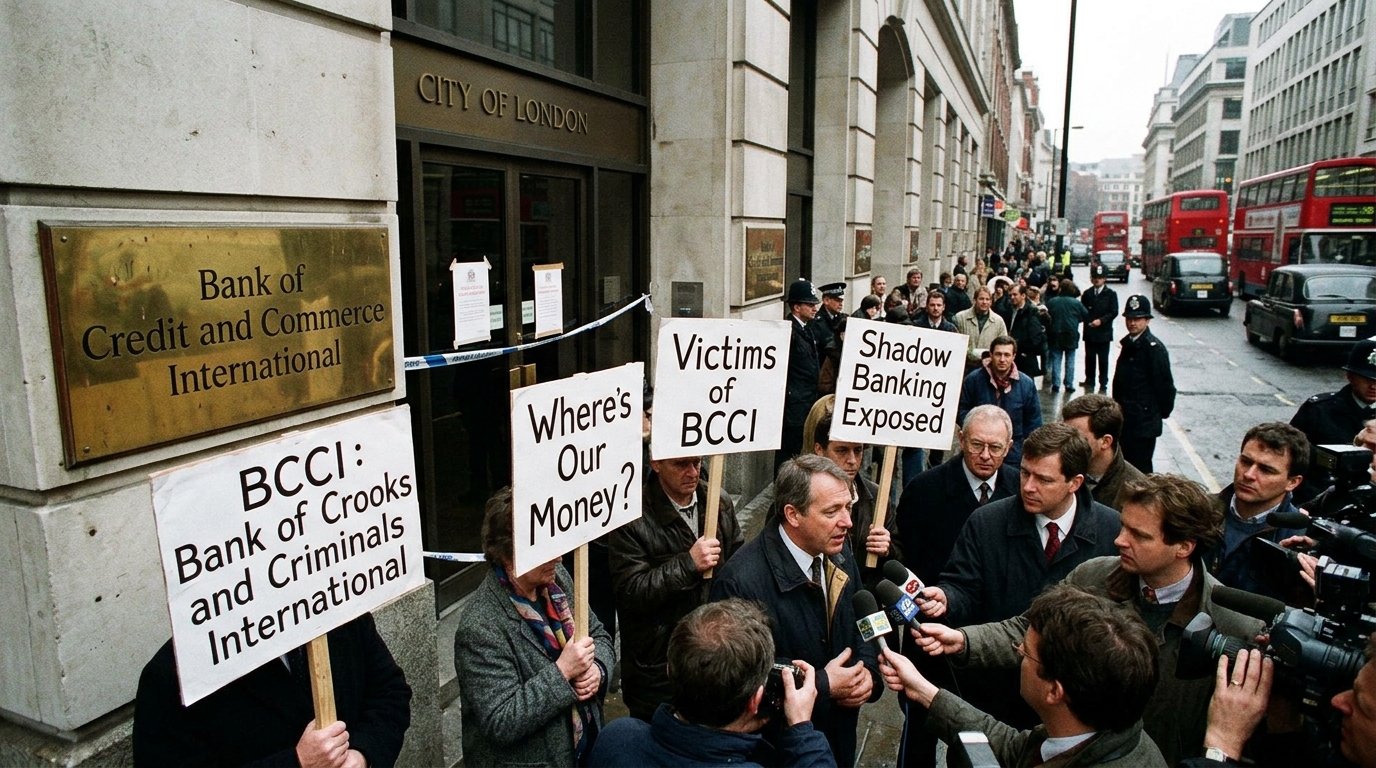
Nicknamed the “Bank of Crooks and Criminals International,” BCCI was not a small offshore fly-by-night operation. It was a legitimate-looking, global banking giant with over $20 billion in assets, operating in more than 70 countries. It had branches in London, Luxembourg, Hong Kong, and even Washington, D.C. Its clients included dictators, drug lords, terrorist financiers, and—most shockingly—Western intelligence agencies that used BCCI as a covert financial weapon.
When the BCCI scandal finally exploded, it revealed a shadow banking system so deep, so corrupt, and so politically connected that regulators deliberately looked the other way for nearly two decades. The collapse wiped out hundreds of thousands of depositors, exposed massive money laundering, and changed banking regulations forever.
This updated investigation—written for a current-generation audience of fintech professionals, compliance officers, journalists, and true-crime finance enthusiasts—re-examines how BCCI operated, why it fell, and what it teaches us about offshore finance and regulatory capture today.
Section 1: The Rise of a Banking Empire Built on Sand
How a Pakistani Financier Built a Global Monster
BCCI was founded by Agha Hasan Abedi, a charismatic Pakistani banker with grand ambitions. His vision: a third-world bank that would challenge Western financial dominance. He opened BCCI in 1972 with headquarters in Luxembourg (a weak regulatory jurisdiction) and operational bases in London and Abu Dhabi.
Unlike traditional banks, BCCI deliberately avoided having a single home country regulator. This regulatory gap became its superpower. By registering everywhere and nowhere, BCCI could play regulators against each other. If one country asked difficult questions, BCCI simply moved its books to another jurisdiction overnight.
Key Growth Drivers
- Aggressive expansion: BCCI acquired banks in the United States (First American Bankshares) illegally.
- Secret ownership: Using nominees and shell companies, BCCI hid its control of American banks.
- Elite clientele: BCCI courted dictators like Saddam Hussein, Manuel Noriega, and Sani Abacha, as well as the Medellín Cartel and Abu Nidal’s terrorist network.
Keyword highlight: This was global financial crime on an unprecedented scale. BCCI became the primary offshore banking hub for narcotics proceeds, arms deals, and intelligence off-books operations.
The Intelligence Connection: Why the CIA and MI6 Looked Away
Most shocking to modern readers: Western intelligence agencies were not victims of BCCI—they were clients. The CIA used BCCI to funnel money to Contra rebels in Nicaragua and to pay off foreign assets. MI6 used BCCI accounts to fund covert operations. Even the Vatican Bank reportedly had indirect ties.
In exchange for this access, intelligence agencies tipped off BCCI about upcoming investigations and blocked regulators from shutting it down. This unholy alliance between spies and criminals kept BCCI alive for years longer than it should have survived.
Keyword highlight: The BCCI intelligence connection remains a textbook case of state-sponsored money laundering where national security excuses were used to shield international fraud.
Section 2: How BCCI Worked – The Mechanics of a Shadow Bank
Fraud, Shell Companies, and Ghost Accounts
BCCI was not just corrupt. It was designed to be corrupt. The bank’s internal motto, according to later investigations, was: “We will do anything for anyone, anywhere.”
Core Criminal Methods
- Layering and shell companies
BCCI created hundreds of nominee companies in Panama, Liberia, the Cayman Islands, and other tax havens. Money would flow from a dictator’s account to a shell company, to a fake trade invoice, to a real estate purchase in Europe—never touching a single regulated ledger. - Correspondent banking abuse
BCCI used legitimate correspondent bank accounts at major American and European banks (including Bank of America and Lloyds) to move dirty money. The correspondent banks collected fees and asked no questions. - Off-the-books loans
When the bank’s own books showed a loss, BCCI simply created fake loan repayments using depositor funds—a classic Ponzi technique. Insiders called this “the big bath.” - Clients of horrors
- Manuel Noriega (Panamanian dictator) laundered drug money through BCCI accounts.
- Saddam Hussein used BCCI to secretly buy weapons.
- Abu Nidal (terrorist) financed attacks through BCCI front companies.
- The Medellín Cartel (Pablo Escobar) moved cocaine proceeds through BCCI’s Colombian network.
Keyword highlight: This was bank fraud mixed with terrorist financing and narcotics money laundering—all under one roof.
The American Connection: Secret Control of U.S. Banks
The biggest crime? BCCI secretly owned First American Bankshares, a Washington, D.C.-based bank holding company. Under U.S. law, foreign ownership of American banks is strictly regulated. BCCI used faked shareholder lists and front men (including a former U.S. Defense Secretary) to hide its control. When the truth emerged, it became clear that BCCI had effectively infiltrated the American financial system.
Section 3: The Collapse – How the “Unbankable” Bank Finally Fell
The Tipping Point: A Small Investigator in Tampa
For years, regulators ignored BCCI. Then a little-known District Attorney in Tampa, Florida—Robert Merkle—began investigating BCCI’s secret ownership of First American. Merkle’s team uncovered internal BCCI documents that referenced “black accounts,” “off-book loans,” and direct payments to foreign officials.
Simultaneously, journalists at The Washington Post and The Wall Street Journal published exposés revealing BCCI’s terror and drug links. The dam broke when the New York State Department of Financial Services—then led by Brian O’Connor—realized that BCCI had lied under oath about its ownership structure.
The Closing of the Bank
- July 1991: Regulators in seven countries simultaneously shut down BCCI operations.
- October 1991: U.S. authorities announce criminal charges against BCCI executives.
- Liquidations continue for over a decade.
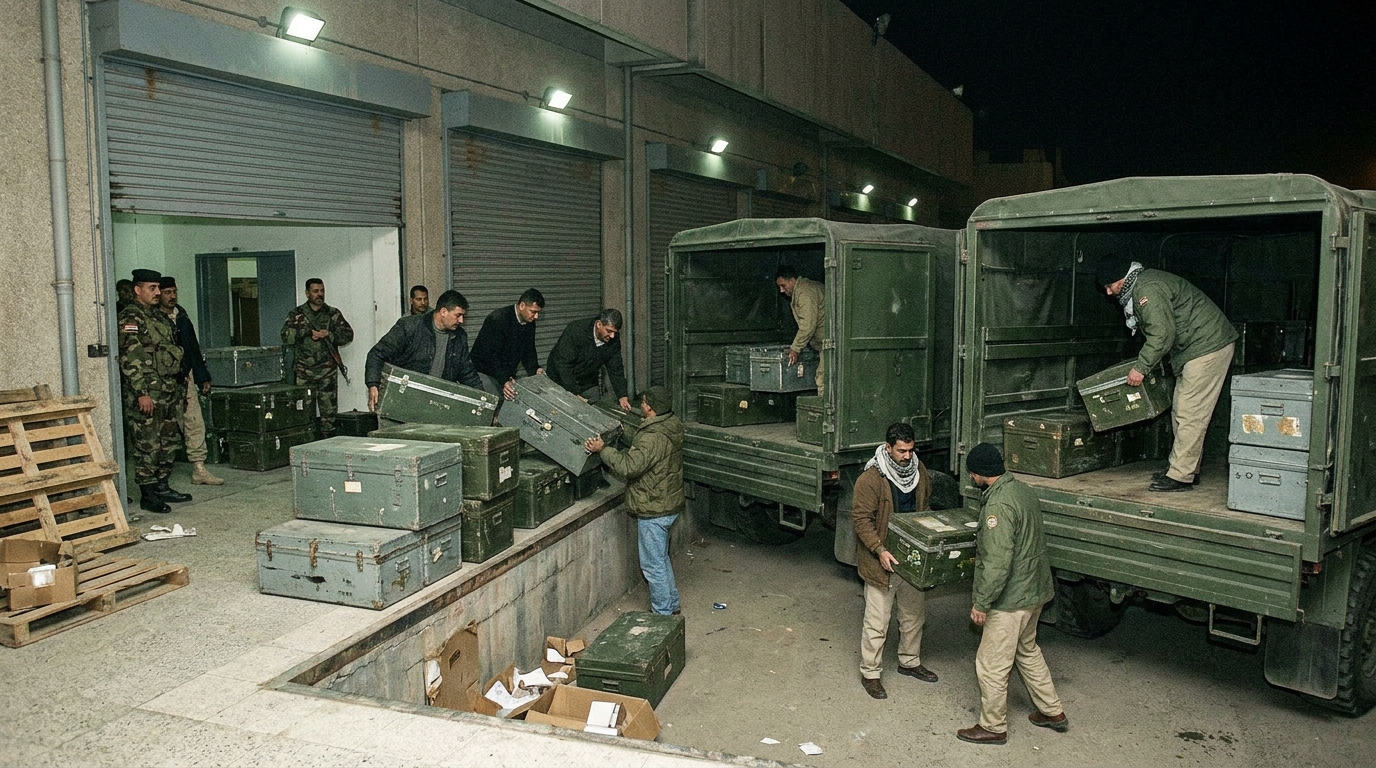
When the vaults were opened, investigators found:
- No real reserves—the bank was insolvent by over $10 billion.
- Fake accounting ledgers—profit was entirely fictional.
- Missing depositor funds—thousands of small account holders, many from developing countries, lost everything.
Keyword highlight: The BCCI liquidation remains one of the largest and most complex cross-border insolvencies in banking history.
The Aftermath: A Handful of Executives Go to Jail, Billions Lost
Despite the scale of the crime, few went to prison. Agha Hasan Abedi was convicted in absentia but died before serving time. Other senior executives received short sentences. The lack of accountability shocked the world and led to demands for banking reform.
Section 4: Why the BCCI Scandal Still Matters for Today’s Audience
The Birth of Modern Anti-Money Laundering (AML) Laws
If you have ever opened a bank account and been asked for a passport, proof of address, and occupation—thank (or blame) BCCI. The scandal directly led to:
- The Bank Secrecy Act (BSA) enhancements in the United States.
- Know Your Customer (KYC) rules becoming mandatory worldwide.
- The creation of Financial Intelligence Units (FIUs) in dozens of countries.
- The Wolfsberg Group (a global anti-money laundering association for major banks).
For the current-generation audience of compliance professionals and fintech founders, BCCI is a reminder: regulatory arbitrage (banking where rules are weakest) can create catastrophic systemic risk.
Keyword highlight: The BCCI collapse is a foundational case study in AML compliance, due diligence failures, and cross-border banking supervision.
Parallels to Modern Financial Scandals
1. Danske Bank (Estonia branch) – $230 billion in suspicious flows
Like BCCI, Danske used a small, weakly regulated branch to move billions for Russian oligarchs and other high-risk clients. Regulators missed obvious red flags for years.
2. Crypto Mixers and Decentralized Finance (DeFi)
Modern crypto tumblers and privacy coins (Monero, Zcash) serve the same function as BCCI’s shell companies—obscuring the origin of funds. Regulators are now battling decentralized versions of the BCCI problem.
3. Shadow Banking and Fintech
Today’s non-bank lenders, payment processors, and neobanks can operate with lighter oversight than traditional banks. BCCI proved that regulatory gaps are magnets for criminal money. The same debate now surrounds Buy Now, Pay Later (BNPL) firms and crypto exchanges.
Section 5: Key Lessons for the Modern Generation
For Banking Professionals and Regulators
- Consolidated supervision is non-negotiable. BCCI exploited the lack of a single home-country regulator. Today’s cross-border fintechs require the same scrutiny.
- Ownership transparency matters. If modern banks must use beneficial ownership registries, BCCI’s secret control of First American Bankshares is the reason why.
- Intelligence agencies must stay out of banking oversight. The CIA’s protection of BCCI prolonged the fraud. Current debates about financial surveillance versus privacy echo this tension.
For Retail Investors and Consumers
- Big does not mean safe. BCCI was a “global systemically important bank” in all but name. Size without transparency is a red flag.
- Your deposits may not be protected if fraud is systemic. In BCCI, deposit insurance schemes failed because the fraud was hidden.
- Follow the journalists. BCCI was exposed by a handful of reporters and a local prosecutor—not by regulators. The same is true of Wirecard and FTX.
For Compliance and AML Officers
- Red flags ignored become crimes enabled. BCCI employees knew about secret accounts but followed orders.
- Cultural corruption starts at the top. Agha Hasan Abedi set the tone: serve dictators, hide losses, silence whistleblowers.
- Technology is not a cure-all. BCCI happened in a paper-based era. But modern AI monitoring and blockchain analytics still require human judgment.
Keyword highlight: The lessons of BCCI are taught in every financial crime compliance (FCC) certification course, from CAMS to ICA.
Section 6: Could Another BCCI Happen Today?
The Short Answer: Yes, But Different
Strict KYC/CDD (Customer Due Diligence) rules make it harder for a single bank to openly serve dictators and drug lords. However, decentralized finance, offshore shell companies, and state-aligned financial institutions (e.g., Russian and Chinese banks facing sanctions) function as modern BCCIs.
Emerging Threats
- Crypto mixers and anonymity-enhanced cryptocurrencies.
Services like Tornado Cash (sanctioned by the U.S. Treasury) offer the same opacity as BCCI’s shell companies. - Trade-based money laundering (TBML).
Over-invoicing and under-invoicing goods—a BCCI specialty—remains a massive loophole. - Fintech “rent-a-bank” schemes.
Some neobanks partner with small, weakly regulated lenders to evade oversight.
The core mechanism is unchanged: move money across borders, hide the owner, use regulatory gaps. Only the technology has evolved.
Conclusion: The Ghost of BCCI Haunts Every Offshore Ledger
The BCCI scandal was not an accident. It was a deliberately engineered system of international fraud, enabled by corrupt regulators, protected by intelligence agencies, and fueled by the drug trade, terrorist networks, and dictatorships. When the doors finally closed, thousands of innocent depositors lost their life savings—and almost no one went to prison.
For today’s generation—crypto investors, fintech builders, compliance officers, and investigative journalists—BCCI is a warning: follow the money, but also follow the regulators. Because the worst financial crimes are not the ones that happen despite the watchdogs. They are the ones that happen with the watchdogs’ help.
The Bank of Crooks and Criminals International is gone. But its blueprint lives on—in offshore havens, in weakly supervised fintechs, and in any country where banking secrecy is more valuable than transparency.
Until we learn that financial privacy without accountability is just crime waiting to happen, another BCCI is only a deregulatory cycle away.
Keywords: VideoTAT, BCCI scandal, Bank of Crooks and Criminals International, shadow banking system, Agha Hasan Abedi, money laundering history, offshore banking fraud, CIA BCCI connection, anti-money laundering lessons, regulatory failure, and financial crime case study. For best performance, use internal links to related financial fraud articles and external references to AML regulatory guidelines.
https://www.youtube.com/@videotat-documentary