Ghost Cities of Finance: The Empty Skyscrapers That Serve as Vertical Bank Accounts
Introduction: The Silent Towers
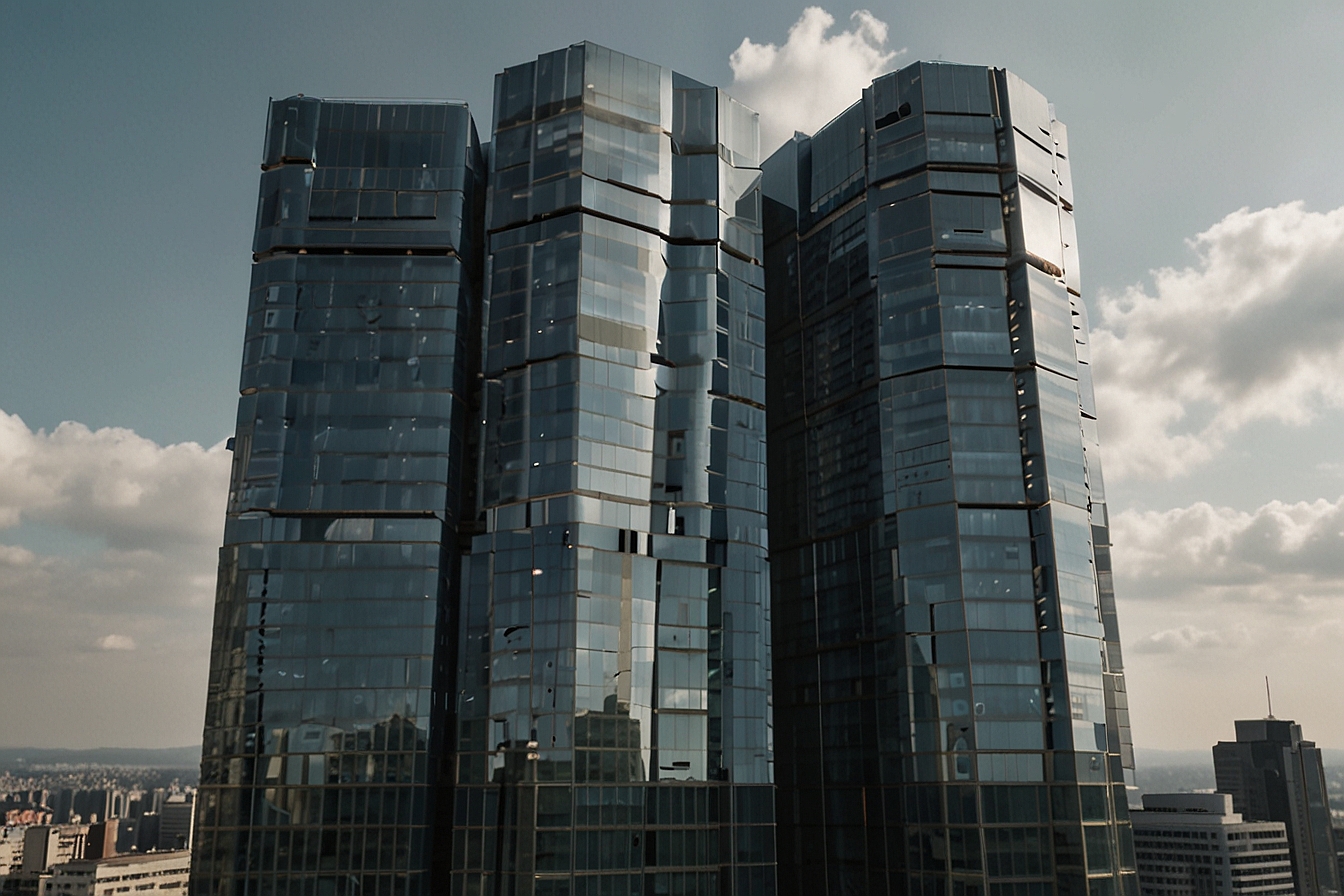
From the outside, they gleam like monuments to prosperity—towering glass-and-steel skyscrapers in the world’s most prestigious financial hubs. But step inside, and you might find something unsettling: floor after floor of darkened offices, unused desks, and hollow corridors. No workers. No meetings. No signs of life. These are the “ghost” cities of finance—specialized economic zones and luxury towers that function less as workplaces and more as vertical bank accounts for offshore wealth.
For the current generation, raised on housing affordability crises, remote work, and viral TikTok exposés of luxury ghost towers, these empty monuments raise urgent questions. Who owns these buildings? Why are they kept vacant? And how does global finance use bricks and mortar to hide trillions of dollars from taxes, regulators, and public scrutiny?
This article peels back the glass curtain wall to reveal the hidden economy of empty skyscrapers, special economic zones (SEZs) , and the offshore financial system that treats real estate as anonymous, untouchable treasure.
Key keywords highlighted: ghost cities of finance, vertical bank accounts, offshore wealth, empty skyscrapers, special economic zones, global financial hubs, hidden economy.
Section 1: What Are “Ghost Cities of Finance”?
Beyond the Abandoned Metropolis
The term “ghost city” often conjures images of crumbling Soviet-era factories or abandoned Chinese megaprojects. But financial ghost cities are different. They are not failed developments. They are intentionally empty. These are luxury towers and dedicated financial districts designed not for human activity but for asset storage.
Vertical Bank Accounts Explained
In traditional banking, you deposit money into an account. In the world of offshore finance, you deposit wealth into physical assets—specifically, prime real estate in cities like London, New York, Vancouver, Dubai, Singapore, and Zurich. A single skyscraper can act as a vertical vault, holding billions in value while generating no economic activity. No jobs. No tax revenue. No housing for local residents. Just silent wealth.
Special Economic Zones (SEZs) as Legal Ghost Towns
Many countries have created Special Economic Zones (SEZs) —areas with lower taxes, lighter regulations, and secrecy-friendly laws. In theory, SEZs attract business. In practice, some have become legal ghost towns, filled with shell companies, mail-drop addresses, and empty offices that exist only on paper. These zones are the neighborhoods of the nowhere economy.
Key keywords highlighted: financial ghost cities, asset storage, offshore finance, prime real estate, vertical vault, Special Economic Zones (SEZs), shell companies, nowhere economy.
Section 2: The Most Notorious Ghost Financial Hubs
London: The Empty Mansions of Mayfair
In central London, entire streets of multimillion-pound townhouses sit vacant for 11 months of the year. They are owned by anonymous offshore companies registered in the British Virgin Islands, Cayman Islands, or Panama. These properties are not homes—they are portable storehouses of value. Local residents face a housing crisis while towers of glass and steel loom dark above them.
New York: Billionaires’ Row’s Dark Floors
In Manhattan, a slender skyscraper known as Billionaires’ Row boasts record-breaking prices—and record-breaking vacancy. Investigations have revealed that many units are owned by shell companies with no identifiable human owners. Some floors are completely unfinished. Others are furnished but never occupied. These apartments are pure financial instruments, bought, sold, and mortgaged without ever being lived in.
Vancouver: The “Ghost Tower” Phenomenon
Vancouver became a global symbol of offshore real estate investment, particularly from Asia. Luxury towers in Coal Harbour and along the Fraser River showed lights off in 90% of units on a given night. Local activists coined the term “ghost tower” to describe buildings that exist as bank accounts in the sky. In response, the city imposed an empty homes tax—a rare but limited check on the practice.
Dubai: Special Zones Within Zones
Dubai’s International Financial Centre (DIFC) and Jumeirah Lakes Towers are masterpieces of the SEZ model. They offer zero corporate tax, 100% foreign ownership, and independent legal systems based on English common law. While some units are genuinely occupied, vast numbers remain speculative holdings for investors who never visit. These towers are less offices than numbered accounts made of steel and concrete.
Key keywords highlighted: London empty mansions, offshore companies British Virgin Islands, Billionaires’ Row, shell companies, Vancouver ghost tower, empty homes tax, Dubai International Financial Centre (DIFC), speculative holdings.
Section 3: How Empty Skyscrapers Function as Vertical Bank Accounts
Anonymity Through Corporate Structures
The key mechanism is anonymity. A wealthy individual does not buy a skyscraper in their own name. Instead, they form a limited liability company (LLC) in a secrecy jurisdiction. That LLC owns another LLC. That one owns a trust. The trust owns the building. By the time you reach the owner, the trail has vanished. This is called the offshore company chain, and it is perfectly legal in most financial hubs.
No Physical Presence Required
Unlike a conventional bank account, a vertical bank account requires no signature, no face-to-face meeting, and no ongoing activity. The building sits there, appreciating in value, while the owner remains hidden. The building can be used as collateral for loans, sold without ever showing the seller’s identity, or passed down to heirs without inheritance taxes.
Price as Signal, Not Utility
In normal markets, real estate prices reflect utility—proximity to jobs, schools, transport. In ghost finance cities, prices reflect secrecy and safety. A dark floor in a London tower is worth more than a lived-in floor because it offers undisturbed storage of value. The price is not a signal of usefulness. It is a signal of how well the asset hides its owner.
The Money Laundering Connection
Empty skyscrapers are also ideal for money laundering. Dirty cash enters the system through a shell company, buys a luxury property, and emerges as “clean” wealth when the property is sold. Authorities have repeatedly flagged this vulnerability, but enforcement remains weak because financial hubs compete for offshore investment.
Key keywords highlighted: vertical bank account mechanism, anonymity, offshore company chain, collateral for loans, inheritance taxes, money laundering, dirty cash, luxury property investment.
Section 4: The Impact on Real People and Local Economies
The Housing Affordability Crisis
For young people and working families in global financial hubs, ghost skyscrapers are not abstract. They are the reason a two-bedroom apartment costs ten times the average salary. When billions of dollars of foreign wealth park themselves in local housing stock, supply shrinks and prices soar. Vacancy taxes, foreign buyer bans, and rent controls are reactive measures—but they rarely undo the damage.
Distorted Urban Development
Cities begin building for global investors rather than local residents. New developments feature concierge services, private elevators, and zero affordable units. Neighborhoods lose their character, becoming sterile wealth storage zones with shuttered storefronts and silent lobbies. The experience economy—cafés, galleries, small businesses—cannot survive alongside vertical bank accounts.
Lost Tax Revenue
When wealth is stored in offshore-owned empty buildings, local governments lose property tax revenue, income tax from residents, and sales tax from spending. To compensate, they raise taxes on actual residents or cut public services. The ghost economy thus subsidizes the rich while punishing the local population.
Key keywords highlighted: housing affordability crisis, vacancy taxes, foreign buyer bans, sterile wealth storage zones, lost tax revenue, ghost economy subsidizes the rich.
Section 5: For the Current Generation – Why This Matters Now
The Rise of Transparent Alternatives
Today’s generation has access to tools the 20th century could not imagine. Blockchain ledgers, public registries of beneficial ownership, and data journalism platforms have made it harder for ghost towers to remain invisible. Activists and developers are building decentralized property registries that cannot be altered by shell companies. Some cities now require anonymous owners to reveal themselves before selling or mortgaging.
The Remote Work Revolution
The shift toward remote work has accelerated a rethinking of urban real estate. If workers no longer need to live in expensive financial hubs, why should cities tolerate empty luxury towers? Some municipalities are converting ghost offices into affordable co-living spaces or public amenities. Others are imposing cracking vacancy taxes that rise each year a unit remains dark.
Crypto Wealth and the New Ghost Owners
A new wave of cryptocurrency millionaires has entered the ghost real estate market, buying empty skyscrapers with Bitcoin, Ethereum, or stablecoins. Like traditional oligarchs, they value anonymity and asset protection. But unlike traditional owners, they can move their wealth across borders in seconds. This has created a second layer of ghost economy: invisible money buying invisible space.
Activism and Awareness
Social media has turned ghost towers into symbols of inequality. TikTok videos panning across dark Billionaires’ Row apartments have garnered millions of views. Hashtags like #HomesNotVaults and #EmptySkyscrapers trend during housing protests. The current generation is not merely observing the ghost cities—it is naming, shaming, and organizing against them.
Key keywords highlighted: blockchain ledgers, beneficial ownership registries, remote work revolution, cracking vacancy taxes, cryptocurrency millionaires, Bitcoin real estate, #HomesNotVaults, housing inequality activism.
Section 6: Solutions and Alternatives – Can We Exorcise the Ghosts?
Transparency Laws
The most powerful tool against vertical bank accounts is transparency. The UK’s Register of Overseas Entities now requires foreign owners of UK property to disclose their ultimate beneficiaries. The EU’s Anti-Money Laundering Directives have pushed similar rules. However, enforcement is uneven, and many owners simply shift their wealth to less transparent jurisdictions.
Progressive Vacancy Taxes
Cities like Vancouver, Paris, and Melbourne have introduced vacancy taxes that charge owners a percentage of a property’s value for every year it remains empty. These taxes must be high enough to make storage cheaper than occupancy—a delicate balance. Early results show moderate success, but ghost towers persist.
Reclaiming Special Economic Zones
Some economists argue that SEZs should be reformed to require genuine economic activity—jobs, manufacturing, services—not just passive ownership. A use-it-or-lose-it rule could force empty-tower owners to either lease their space at affordable rates or surrender it to the city.
Decentralized Alternatives
The ultimate solution may not lie in regulation but in alternatives. Decentralized finance (DeFi) offers ways to store and borrow value without buying physical real estate. Tokenized property allows buildings to be owned by hundreds of small investors rather than one hidden billionaire. Community land trusts remove land from the speculative market altogether. These models are still emerging, but they point away from ghost cities and toward living cities.
Key keywords highlighted: transparency laws, Register of Overseas Entities, Anti-Money Laundering Directives, progressive vacancy taxes, use-it-or-lose-it rule, decentralized finance (DeFi), tokenized property, community land trusts, living cities vs ghost cities.
Conclusion: The Future of Finance Is Not Empty
The ghost cities of finance—those gleaming, silent skyscrapers and special economic zones—are not accidents. They are the physical form of a global system that values secrecy over shelter and storage over community. For the current generation, these empty towers are both a warning and an invitation. The warning is that unchecked offshore wealth distorts economies, hollows out neighborhoods, and widens inequality. The invitation is to build something better: financial systems that are transparent, accountable, and rooted in real human need.
Whether through blockchain transparency, vacancy taxes, community ownership, or simply refusing to celebrate empty monuments to wealth, the power to fill these ghost towers lies with the generation that refuses to live in their shadow. The question is not whether the towers will remain empty. The question is whether we will continue to let them stand as vertical bank accounts—or transform them into something truly alive.
ghost cities of finance summary, vertical bank accounts explained, offshore wealth real estate, empty skyscrapers problem, special economic zones critique, housing affordability global finance, future of transparent finance.
https://www.youtube.com/@videotat-documentary
https://twitter.com/VideoTAT_docs
https://www.facebook.com/VideoTAT.1
https://www.pinterest.com/VideoTAT/