The Central Bank of Iraq Heist: The $1 Billion Disappearance That Shook Global Finance
Introduction: The Most Audacious Bank Robbery in Modern History
Just hours before the world watched military forces advance on Baghdad, an astonishing crime unfolded deep inside the Central Bank of Iraq. Nearly one billion dollars—packed into humble metal trunks—was loaded onto trucks and driven into the chaos of a collapsing regime.
No masks. No alarms. No getaway cars screeching through the night.
This wasn’t a scene from a heist film. It was a state-sanctioned disappearance of monumental proportions. To this day, the Central Bank of Iraq theft remains one of the largest unrecovered cash thefts in history—and one of the most confusing.
Most of the money was never returned. The story involves dictators, hidden bunkers, American investigators, and a trail of missing billions that still fuels conspiracy theories.
Below, we update this shocking event for a modern audience, breaking down how the heist happened, why it still matters, and what it reveals about wartime finance, corruption, and the fragility of national wealth.
Part 1: The Context – Iraq on the Brink of War
Baghdad, Just Before the Fall
In the days leading up to the 2003 invasion of Iraq, the country was a powder keg. Saddam Hussein’s regime faced imminent collapse. Streets emptied. Government officials vanished. And the Central Bank of Iraq—once a symbol of national sovereignty—became a target from within.
What Made the Bank Vulnerable?
- Crumbling command structure – Senior bank officials had no clear orders.
- Looting fears – The bank’s vaults held billions in U.S. dollars and Iraqi dinars.
- No international oversight – Sanctions had isolated Iraq’s financial systems.
For a regime desperate to survive, the bank wasn’t a fortress—it was a lifeline.
Key Keywords (Context):
- Central Bank of Iraq heist
- 2003 Iraq war theft
- Saddam Hussein missing billions
- Baghdad collapse financial crime
- Wartime bank robbery history
Part 2: The Heist – How $1 Billion Walked Out the Door
The Night Before the Invasion
According to declassified U.S. intelligence and interviews with former Iraqi officials, the operation was stunningly simple:
- A handwritten note – Saddam Hussein’s son, Qusay Hussein, arrived at the Central Bank with an authorization letter.
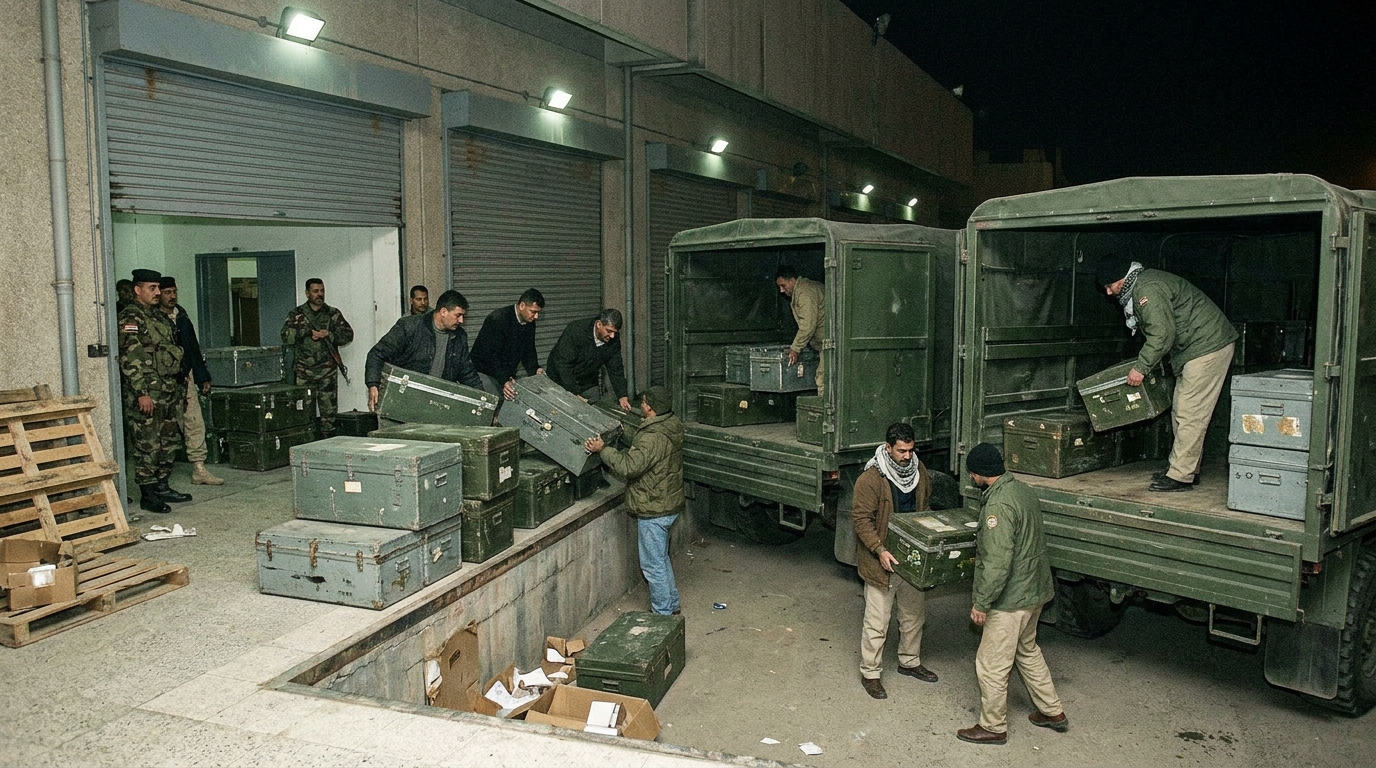
- Metal trunks – Bank employees were ordered to fill dozens of metal shipping trunks with crisp $100 bills.
- Trucks at the loading dock – Without any security audit, the trunks were loaded onto flatbed trucks.
- Disappearance into the night – The convoy drove toward a secret location—never to be publicly accounted for.
By the Numbers:
- Total stolen: ≈ $1 billion (equivalent to over $1.6 billion today)
- Time elapsed: A single overnight shift
- Resistance from bank staff: Zero
- Armed guards present: Yes—but following orders
Who Ordered the Theft?
While Saddam Hussein was the ultimate authority, most evidence points to Qusay Hussein (his younger son) and Abdel Hamid Mahmoud (Saddam’s personal secretary) as the direct orchestrators. Their goal: secure a war chest to fund an insurgency, bribe military commanders, and ensure the family’s survival.
Modern Comparison:
Imagine a sitting government withdrawing $1 billion in cash hours before a foreign invasion—no receipts, no digital trail, no legislative approval. In today’s world of blockchain ledgers and real-time financial tracking, such an act would trigger immediate global sanctions. But in 2003, cash still ruled.
The Metal Trunks: A Symbol of Obscurity
Why metal trunks? Because they were inconspicuous, stackable, and easily transported. Witnesses described ordinary-looking containers—nothing like the armored cash boxes used by modern central banks. This low-tech approach allowed the heist to blend in with legitimate last-minute evacuations.
Part 3: Aftermath – The Hunt for the Missing Billions
What Happened Immediately After the Invasion?
Once Baghdad fell, U.S. forces discovered chaos—but not the money. The Central Bank of Iraq building was looted, but its main vaults were nearly empty. Investigators from the FBI and Department of Defense launched a frantic search.
Key Findings:
- $650 million was later recovered—buried in bunkers, hidden inside palace walls, and stashed in cold storage rooms.
- ~$350 million to $500 million remains unaccounted for to this day.
- No single person has ever been prosecuted for the theft.
Theories on Where the Money Went
The missing billions have fueled decades of speculation. Here are the leading theories, updated for today’s audiences:
| Theory | Likelihood | Modern Parallel |
|---|---|---|
| Insurgency funding | High | Like untraceable crypto wallets used by militant groups. |
| Bribes & escape payments | Medium | Similar to dark money flows in conflict zones. |
| Buried and never recovered | Medium | Modern-day treasure hunts still happen in former war zones. |
| Taken by U.S. personnel | Low (investigated) | Comparable to wartime asset seizure controversies. |
Keywords for This Section:
- Missing Iraqi billions
- Central Bank of Iraq investigation
- Saddam Hussein hidden wealth
- Wartime cash looting
- Recovered vs. unrecovered funds
Part 4: Why the Central Bank of Iraq Theft Still Matters – Updated for Today
Lessons for Modern Financial Security
The heist revealed catastrophic failures in wartime financial governance that no country wants to repeat:
- No digital tracking – Today, central banks use blockchain prototypes and real-time ledger systems to prevent bulk cash removal without audit trails.
- Weak separation of powers – In stable democracies, no single family member can authorize a billion-dollar withdrawal.
- Lack of international monitors – Modern post-conflict zones often deploy IMF observers to secure central banks.
Pop Culture & True Crime Revival
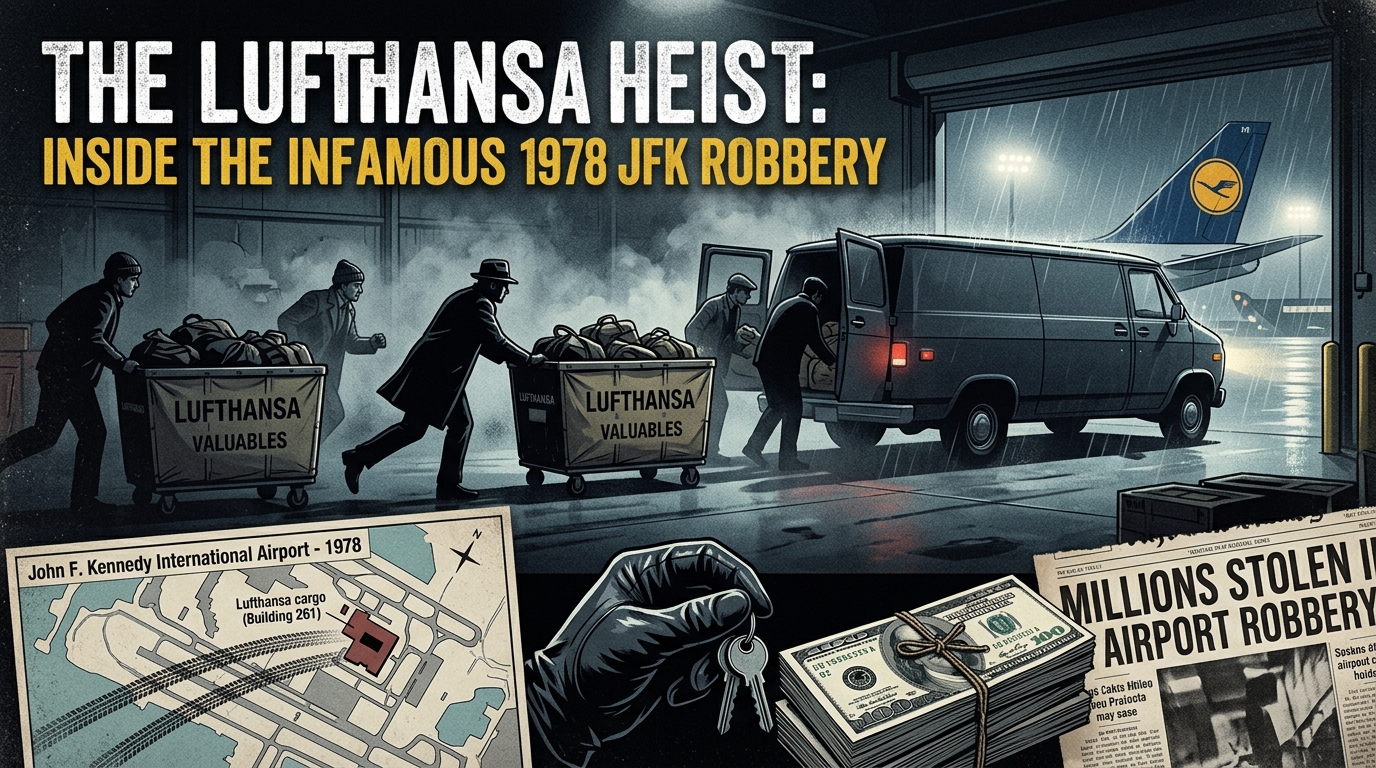
While less famous than the Lufthansa Heist, the Central Bank of Iraq theft has gained new attention through:
- Podcasts like Swindled and Dark Money
- YouTube documentaries on “greatest unsolved heists”
- Reddit threads (r/UnresolvedMysteries, r/TrueCrime) debating the money’s location
- TikTok explainers calling it “the $1 billion suitcase mystery”
How It Compares to Other Major Heists
| Heist | Amount (Today’s Value) | Recovery Rate | Famous For |
|---|---|---|---|
| Lufthansa (1978) | $25M+ | <2% | Mob violence, Goodfellas |
| Central Bank of Iraq (2003) | $1.6B+ | ~65% | State-sponsored, wartime chaos |
| Bangladesh Bank cyber heist (2016) | $81M | ~80% | Hackers & Fed accounts |
The Iraq heist remains unique because it was inside-out: the enemy wasn’t a gang—it was the government itself.
Part 5: The Human Story – Bank Employees, Soldiers, and Whistleblowers
What Happened to the Bank Workers?
Employees at the Central Bank of Iraq that night faced an impossible choice: follow orders from Saddam’s son or refuse and face execution. Most complied. Years later, several gave anonymous interviews to journalists, describing the surreal sight of metal trunks stacked to the ceiling, loaded without a single receipt.
The American Investigation
U.S. forces found some of the money in remarkable places:
- Hidden inside a false wall of Saddam’s palace bathroom.
- Buried in metal drums near a chicken farm.
- Stacked in a baggage hold of an abandoned Iraqi Airways plane.
Yet the bulk of the missing billions—estimates range from $350 million to $500 million—has never been found. No satellite imagery, no informant tip, no deathbed confession has cracked the case.
Part 6: What a Current-Generation Audience Should Take Away
The Heist’s Legacy in the Age of Digital Finance
For Gen Z and Millennials raised on Venmo, Apple Pay, and cryptocurrency, the idea of moving $1 billion in physical cash seems almost absurd. Yet the Central Bank of Iraq theft is a stark reminder that physical currency still plays a role in conflict zones and authoritarian regimes—and that cash, unlike a bank transfer, can simply vanish.
Three Key Lessons:
- Without transparency, wealth is vulnerable. The heist succeeded because no independent board, audit, or international monitor was watching.
- Wartime chaos creates cover. The invasion itself distracted investigators for critical weeks.
- Some mysteries never close. Even with drones, satellites, and forensic accounting, hundreds of millions remain hidden—possibly under Iraqi soil.
Keywords for Modern SEO:
- Biggest unsolved heists in history
- Central Bank of Iraq true crime story
- Missing wartime billions
- Saddam Hussein cash disappearance
- Metal trunks full of money mystery
- Iraq war financial crimes
Conclusion: The $1 Billion Question That Won’t Die
The Central Bank of Iraq theft is not just a financial crime—it’s a wartime riddle with no full resolution. Nearly one billion dollars, packed into metal trunks and driven into the desert, has never been fully accounted for. Some was recovered. Some funded insurgencies. And some… simply evaporated.
For today’s true crime enthusiasts, history buffs, and finance professionals, the case offers a unique blend of geopolitical drama and old-school mystery. It reminds us that even in an era of digital surveillance and global tracking, cash can still disappear—especially when those in power are the ones taking it.
Epilogue: Could It Happen Again?
With modern central bank safeguards, real-time auditing, and international pressure, a heist of this scale is far less likely today—but not impossible. Nations on the brink of collapse (e.g., conflict zones with weak governance) remain vulnerable. The difference is that today, the money would likely move through cryptocurrency wallets, shell companies, or offshore accounts—not metal trunks.
But the Central Bank of Iraq story endures as a warning: when a government steals from its own people, the truth often leaves with the trucks.
https://www.youtube.com/@videotat-documentary