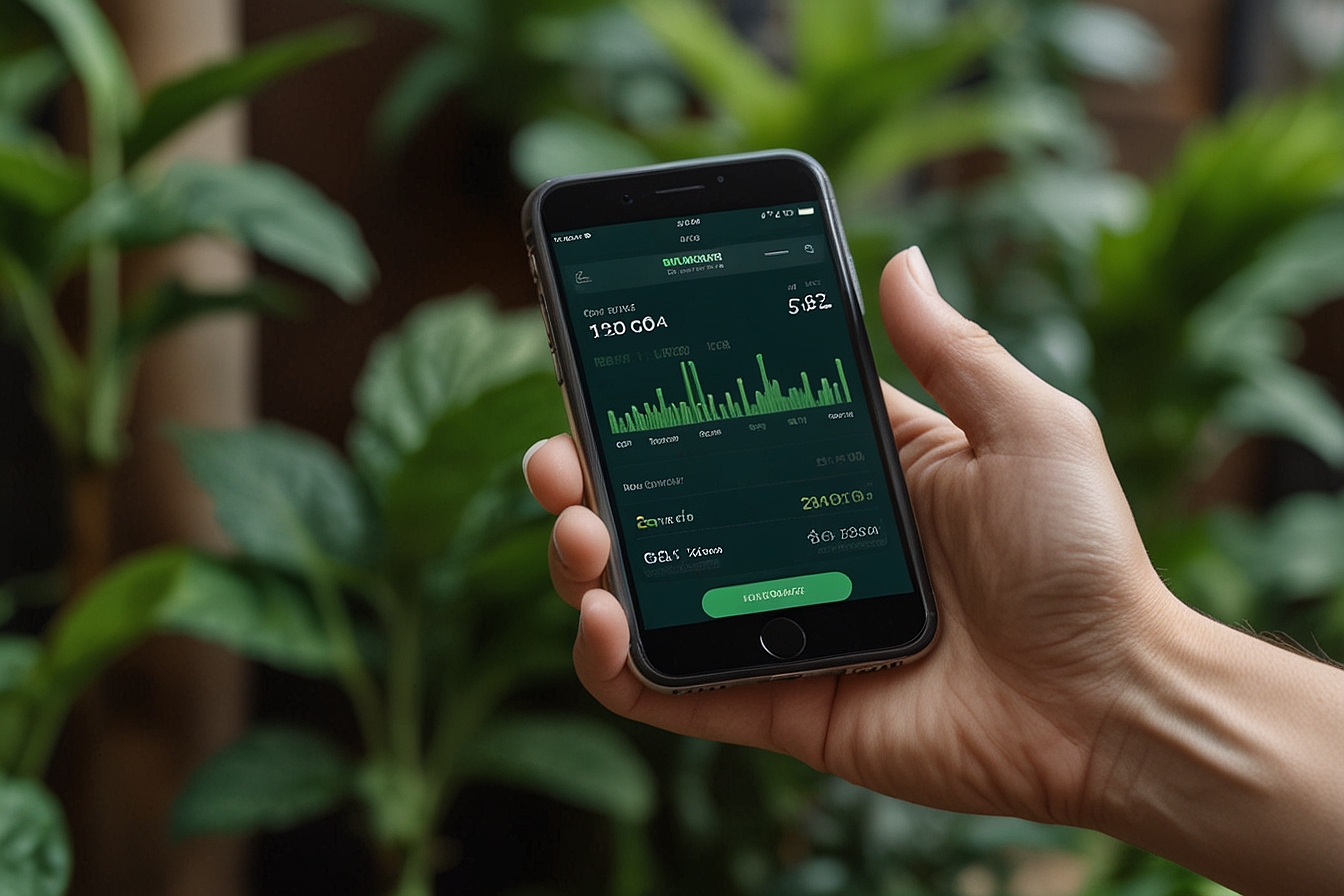
Sustainable Fintech (Green Finance): Apps Focused on Carbon Footprint Tracking and Incentivizing Eco-Friendly Consumer Spending
Climate change is no longer a distant threat—it is a present reality that shapes daily decisions. What to eat, how to commute, where to bank, and what to buy all carry a carbon cost. Yet for most consumers, that cost remains invisible. A gallon of fuel shows a price tag but not its emissions. A new smartphone lists features but not its manufacturing footprint. This information asymmetry makes it nearly impossible to align spending with environmental values.
Sustainable fintech—also known as green finance technology—closes this gap. A new generation of mobile apps and digital banking platforms now tracks users’ carbon footprints in real time and provides direct incentives for eco-friendly consumer spending. By connecting spending data to environmental impact, these tools turn abstract climate goals into actionable, rewarding daily choices.
This article explores how sustainable fintech works, the leading apps and features available to the current generation, the behavioral science behind green incentives, integration with traditional banking, and the measurable impact on both personal emissions and broader environmental goals.
1. What Is Sustainable Fintech? A Modern Definition
The Convergence of Finance and Climate Action
Sustainable fintech refers to digital financial tools and platforms that explicitly incorporate environmental, climate, or ecological metrics into their core functionality. Unlike traditional banking apps that only show balances and transactions, sustainable fintech apps show carbon impact, offset opportunities, and rewards for low-carbon choices.
Keyword highlight: Sustainable fintech, green finance, carbon footprint tracking, eco-friendly spending, environmental fintech.
The Core Value Proposition
| Traditional Banking App | Sustainable Fintech App |
|---|---|
| Shows spending by category | Shows spending by carbon intensity |
| Offers cashback or points | Offers rewards for low-carbon purchases |
| No visibility into emissions | Real-time carbon footprint estimates |
| Generic savings tips | Personalized green spending recommendations |
| No offsetting options | One-tap carbon offset integration |
Why This Matters Now
Current-generation consumers—particularly younger demographics—demand climate alignment from their financial providers. A majority express willingness to change spending habits if given clear, actionable data. Sustainable fintech apps provide the infrastructure for this behavioral shift, turning environmental concern into measurable action.
2. How Carbon Footprint Tracking Works in Fintech Apps
Data Sources and Integration
Sustainable fintech apps connect to users’ financial accounts via open banking APIs (e.g., Plaid, Yapily, Tink, TrueLayer). Once granted permission, the app reads transaction data—merchant name, amount, category, and timestamp—and applies carbon intensity calculations to each purchase.
Keyword highlight: open banking APIs, transaction data, carbon intensity, merchant categorization.
Calculation Methodologies
Different apps use different models, but most rely on established carbon accounting databases:
| Category | Example Purchase | Approximate CO₂e per $1 (varies) |
|---|---|---|
| Aviation | Flight ticket | Very high (0.5–1.5 kg) |
| Ground transport | Gasoline, diesel | High (0.3–0.8 kg) |
| Meat & dairy | Beef, cheese | High (0.2–0.6 kg) |
| Utilities | Electricity, gas | Medium (0.1–0.4 kg, varies by grid) |
| Fashion (new) | Fast fashion clothing | Medium (0.1–0.3 kg) |
| Plant-based food | Vegetables, grains | Low (0.02–0.1 kg) |
| Public transit | Bus, train ticket | Low (0.01–0.05 kg) |
| Digital services | Streaming, software | Very low (negligible per dollar) |
Granularity and Accuracy
No app is perfect. Carbon footprints vary by production methods, shipping distances, and local energy grids. However, leading apps achieve category-level accuracy (e.g., “flying emits more than taking a train”) and improve over time with more data sources, including receipt-level itemization and supply chain databases.
Beyond Spending: Subscriptions and Bills
Advanced apps also track emissions from recurring expenses:
- Home energy – Connect to utility accounts or estimate from bill amounts.
- Subscription services – Streaming video, cloud storage, and delivery memberships all carry embedded emissions.
- Insurance – Some apps estimate the carbon impact of insured assets (e.g., car insurance encourages low-mileage driving).
Keyword highlight: carbon accounting databases, category-level accuracy, recurring expense tracking, embedded emissions.
3. Core Features of Sustainable Fintech Apps
Real-Time Carbon Dashboard
Users see a personalized carbon dashboard showing:
- Total estimated footprint – Weekly, monthly, or annual (often compared to national averages).
- Breakdown by category – Transport, food, shopping, home energy, etc.
- Trends over time – Is your footprint rising or falling?
- Hotspots – Which specific merchants or spending types drive the most emissions.
Personalized Green Recommendations
Based on spending patterns, the app suggests lower-carbon alternatives:
- “You bought beef three times this week. Try a plant-based option next time.”
- “Your electricity provider is coal-heavy. Here is a renewable plan that saves you money.”
- “You take rideshares often. A monthly transit pass would reduce emissions by 60%.”
Keyword highlight: carbon dashboard, personalized recommendations, emission hotspots, lower-carbon alternatives.
Automated Carbon Offsetting
Users can opt to automatically offset their estimated footprint:
- Round-ups – Each transaction is rounded to the nearest dollar; the difference buys verified carbon credits.
- Subscription offsets – A fixed monthly fee offsets the user’s entire estimated footprint.
- Per-trip offset – After a flight purchase, the app offers to offset that specific journey.
Offset projects typically include reforestation, renewable energy, methane capture, or community-based conservation.
Rewards and Incentives for Green Spending
To encourage behavioral change, apps offer direct rewards for low-carbon purchases:
| Spending Behavior | Typical Reward |
|---|---|
| Public transit fare | Cashback (e.g., 5–10%) |
| Bicycle or scooter share | Loyalty points or discounts |
| Plant-based grocery items | Bonus offset credits |
| Secondhand or repaired goods | Coupons for partner brands |
| Energy-efficient appliance | Reduced loan interest (via partner bank) |
Keyword highlight: automated offsetting, carbon credits, reward incentives, green cashback, behavioral change.
Green Banking Integration
Some sustainable fintech apps are full-fledged neobanks (e.g., Aspiration, Tomorrow, 24°). Others overlay on existing bank accounts (e.g., Doconomy, Cogo, Emma). Full banking integration offers:
- Green checking accounts – Deposits used only for low-carbon investments.
- Carbon-limited cards – Spending stops when a personal monthly carbon budget is exceeded.
- Merchant-level emissions data – See which specific brands have high or low footprints.
4. Leading Sustainable Fintech Apps (Current Generation)
Doconomy (Sweden / Global)
Doconomy is a pioneer in carbon tracking. Its Åland Index calculates transaction-level emissions using a globally recognized methodology. Key products:
- DO Black – A Mastercard that tracks and limits carbon impact (refills by taking climate action).
- 2030 Calculator – A digital tool for banks to embed carbon tracking into their own apps.
- Climate Action – Offset purchases automatically via Gold Standard projects.
Keyword highlight: Doconomy, Åland Index, carbon-limiting card, climate action offset.
Aspiration (USA)
Aspiration offers a sustainable neobank with a “Plant Your Change” feature that rounds up purchases to plant trees. Key features:
- Carbon auto-Offset – Every gallon of gas purchased is automatically offset.
- Spending analysis – Shows “personal carbon footprint” alongside spending.
- Reduced fees – No fees for accounts that maintain a “Consciousness” rating.
Cogo (UK / Global)
Cogo partners directly with mainstream banks (including NatWest, Westpac, and Banco Bradesco) to embed carbon tracking into their existing apps. Instead of building a separate app, Cogo provides the white-label engine that banks offer to their millions of customers.
Tomorrow (Germany)
Tomorrow is a fully green digital bank. It tracks carbon footprints, invests customer deposits exclusively in sustainable projects, and offers a deforestation-free debit card (made from recycled ocean plastic).
Ekobank (Nordics)
Ekobank focuses on behavioral nudges:
- Users set a personal carbon budget.
- The app vibrates or sends a notification when a purchase exceeds the budget for that category.
- Positive reinforcement (“Great choice! This bus ride saved 2.3 kg of CO₂ compared to driving”).
Yayzy (UK)
Yayzy gamifies sustainable spending. Users compete with friends on lowest weekly carbon footprint. Points unlock discounts at eco-friendly merchants. The app also shows the equivalent impact (e.g., “This burger’s footprint = 1 hour of LED lightbulb use”).
Keyword highlight: Aspiration, Cogo, Tomorrow Bank, white-label carbon tracking, gamified sustainability.
5. Incentivizing Eco-Friendly Spending: Behavioral Economics in Action
Sustainable fintech apps are not just about information—they are about changing behavior. They draw on established principles of behavioral economics.
Salience and Visibility
A carbon footprint hidden in a corporate report has no effect. A footprint shown next to every transaction, in a colorful dashboard, is salient. Users cannot ignore it. Repeated exposure shifts norms.
Loss Aversion
People are more motivated to avoid losses than to pursue gains. Apps use this by:
- Setting a monthly carbon budget (loss if exceeded).
- Showing the environmental cost of a purchase before confirming (pre-commitment loss).
- Deducting “carbon points” from a starting balance (loss framing works better than gain framing).
Keyword highlight: behavioral economics, salience, loss aversion, carbon budget, pre-commitment.
Social Comparison
Many apps include leaderboards or community averages. Seeing that peers have a lower carbon footprint motivates improvement (for most users). Social features also enable group challenges (e.g., “Office emissions reduction month”).
Immediate Rewards vs. Delayed Consequences
Climate benefits are delayed and abstract. Sustainable fintech apps replace or supplement them with immediate, tangible rewards:
- Cashback in your account today.
- Badges and achievements.
- Discounts at popular merchants.
- Trees planted in your name (visible via satellite imagery in the app).
Commitment Devices
Users can pre-commit to green behaviors:
- “I will use public transit for all work commutes next month.”
- The app holds a small deposit, refunded only if the commitment is met (verified via GPS or transaction data).
6. The Role of Financial Institutions in Green Fintech
Green Credit Scoring
Some lenders are experimenting with green credit scores. A customer with consistently low-carbon spending (e.g., no fossil fuel purchases, high public transit use) receives a lower interest rate or higher credit limit. The logic: environmentally conscious behavior correlates with other forms of responsibility.
Sustainable Investment Integration
Sustainable fintech apps increasingly integrate ESG investing:
- Spare change goes into a green ETF (exchange-traded fund).
- Cashback rewards are invested in renewable energy projects.
- Users see the carbon impact of their investment portfolio alongside their spending footprint.
Keyword highlight: green credit scoring, ESG investing, sustainable ETFs, impact investment.
Green Loans and Mortgages
Banks partner with sustainable fintech apps to offer:
- Green home improvement loans – Lower rates for solar panels, heat pumps, or insulation.
- EV (electric vehicle) financing – Reduced APR for electric car purchases.
- Eco-mortgages – Better terms for energy-efficient homes (certified by LEED, Passive House, or local equivalents).
Carbon-Intelligent Payment Routing
An emerging feature: when you tap your card, the payment is routed through merchants with lower carbon intensity. A purchase at a fossil-fuel-heavy merchant might be declined (or show a warning), while the same purchase at a sustainable alternative is approved instantly.
7. Benefits for Consumers and Society
For Individual Users
- Clarity – Understand the true climate cost of daily spending.
- Agency – Take meaningful, measurable action through everyday choices.
- Financial rewards – Earn cashback, points, or discounts for green spending.
- Peace of mind – Automatic offsetting removes guilt from unavoidable emissions (e.g., medical flights).
For Households
- Lower utility bills – Recommendations often align with energy efficiency, saving money.
- Health co-benefits – Walking, biking, and plant-based meals reduce emissions and improve health.
- Financial discipline – Carbon budgeting often reveals wasteful spending (e.g., unused subscriptions).
Keyword highlight: consumer benefits, measurable action, automatic offsetting, health co-benefits, financial discipline.
For Society
- Shifted demand – As millions of users favor low-carbon products, entire industries adapt.
- Transparent supply chains – Pressure on merchants to disclose and reduce emissions.
- Data aggregation – Anonymized spending data helps policymakers and researchers understand consumption-based emissions.
- Climate justice – Offset projects and green banking can direct capital to vulnerable communities.
8. Challenges and Criticisms of Sustainable Fintech
Challenge 1: Accuracy and Standardization
Different apps use different carbon calculation models. A $10 steak might show 3 kg CO₂e in one app and 6 kg in another. Users lose trust when numbers conflict.
Mitigation: Industry initiatives for carbon accounting standards (e.g., Partnership for Carbon Accounting Financials – PCAF). Apps should disclose their methodology and update as science improves.
Challenge 2: Greenwashing Risk
Apps could overstate the impact of offsets or label minor changes as “green” to attract users without real change. A small round-up to plant a tree does not justify continued high emissions.
Mitigation: Third-party verification of offset projects (Gold Standard, Verra, Climate Action Reserve). Independent audits of app methodologies. Transparency on what “offset” actually means (e.g., tonnage, permanence, additionality).
Keyword highlight: carbon accounting standards, greenwashing risk, offset verification, additionality, methodology transparency.
Challenge 3: User Drop-Off and Engagement
Many users download a sustainable fintech app, track their footprint for a week, then stop engaging. Without sustained behavior change, the impact is negligible.
Mitigation: Gamification, social features, tangible rewards (cashback, not just points), and integration into primary banking apps (so users do not need a separate app).
Challenge 4: Data Privacy Concerns
Carbon tracking requires deep access to transaction history. Some users are uncomfortable sharing this level of detail with a third party.
Mitigation: Local processing (on-device calculations), anonymized aggregation, clear privacy policies, and opt-in only for granular features. Banks partnering with Cogo-style providers keep data within the bank’s trusted environment.
Challenge 5: The Rebound Effect
A user might offset a flight, feel “license to emit,” and then take more flights. The net impact could be zero or negative.
Mitigation: Apps should frame offsetting as a last resort, not a solution. Show users that reducing emissions is far more effective than offsetting them. Some apps hard-cap offset amounts to prevent moral licensing.
9. Integration with Broader Green Finance Ecosystem
Corporate Spending and Supply Chains
Sustainable fintech is not just for individuals. Business editions of these apps track company spending, employee commuting, and supply chain emissions. A CFO can see the carbon footprint of each supplier and incentivize greener procurement.
Carbon-Insured Products
Some fintechs partner with insurers to offer carbon insurance. If a user purchases an offset that fails (e.g., a forest planted but later burned), the insurance pays to purchase replacement offsets.
Government and Policy Applications
Governments can use sustainable fintech infrastructure to:
- Distribute climate dividends – Direct carbon tax revenues to citizens’ green wallets.
- Subsidize green purchases – Instant rebates for energy-efficient appliances, paid via app.
- Track policy effectiveness – Anonymous spending data shows whether incentives actually change behavior.
Keyword highlight: corporate sustainability, supply chain emissions, carbon insurance, climate dividends, policy tracking.
10. The Future of Sustainable Fintech
Real-Time Product-Level Carbon Data
Instead of estimating “restaurant meal,” future apps will access item-level data from receipts or product barcodes. A user scans a yogurt container; the app shows its exact farm-to-fridge footprint. This requires supply chain transparency standards (e.g., Product Environmental Footprint – PEF).
AI-Powered Hyper-Personalization
AI agents will act as personal sustainability assistants:
- “You are planning a trip to Chicago. Here are flight options with their carbon costs, plus train alternatives.”
- “Your refrigerator needs replacement. Based on your usage, an Energy Star model saves X kg and pays for itself in Y months.”
Keyword highlight: item-level carbon data, supply chain transparency, AI sustainability assistant, hyper-personalization.
Embedded Green Finance
Sustainable fintech will become invisible—embedded directly into the payment experience. When you tap your phone to pay, the terminal shows the carbon impact before you authorize. Green rewards apply instantly. No separate app needed.
Blockchain for Transparent Offsets
Tokenized carbon credits on public blockchains (e.g., Toucan, Flowcarbon) ensure that each offset is unique, retired properly, and not double-counted. Apps will automatically retire blockchain-based credits with every offset purchase, providing fully auditable proof.
Central Bank Digital Currency (CBDC) for Green Policy
If a CBDC includes programmability, governments could:
- Issue “green CBDC” with lower transaction fees for purchases at low-carbon merchants.
- Create time-limited “climate wallets” for disaster relief that can only be spent on essentials.
- Automatically apply carbon taxes at the point of sale, with proceeds returned as dividends.
Climate Risk Scoring for Loans
Banks will use sustainable fintech data to assess climate risk at the individual level. A homeowner in a wildfire zone who has installed fire-resistant landscaping and solar panels pays lower insurance and mortgage rates. The app tracks these green upgrades automatically.
11. How to Choose a Sustainable Fintech App: A Buyer’s Guide
Step 1 – Define Your Priorities
Ask yourself:
- Do I want a full green bank or just an overlay on my existing bank?
- Am I more interested in tracking, offsetting, or earning rewards?
- Do I trust automated offsets, or do I want to choose specific projects?
Step 2 – Check the Methodology
Review the app’s carbon calculation source. Does it use recognized databases? Is the methodology published? Has it been audited?
Step 3 – Evaluate Offset Quality
If offsetting is included, verify:
- Additionality – Would the project have happened anyway?
- Permanence – Is carbon stored for decades or centuries?
- Verification – Gold Standard, Verra (VCS), or similar?
Keyword highlight: app selection guide, methodology audit, offset quality, additionality, project verification.
Step 4 – Understand Privacy and Data Use
Read the privacy policy. Does the app sell anonymized data to third parties? Do they process data locally? Can you delete your history?
Step 5 – Test the User Experience
Try the free version first. Is the dashboard clear? Are recommendations actionable? Does the app genuinely change how you think about spending? If it feels like a chore, you will not stick with it.
12. Conclusion: Spending as a Climate Action
The current generation has more financial power than any before—and faces more urgent environmental consequences. Sustainable fintech transforms that power into agency. By making the carbon footprint of every transaction visible, and by incentivizing eco-friendly consumer spending with rewards, cashback, and social recognition, these apps close the gap between intention and action.
No single app will solve climate change. But millions of users shifting billions of dollars toward low-carbon goods and services sends an unmistakable signal to markets, corporations, and policymakers. Sustainable fintech provides the infrastructure for that shift: accurate measurement, personalized guidance, automated offsets, and immediate rewards.
For the environmentally conscious consumer, the question is no longer “What should I do?” The data exists. The tools exist. The rewards exist. Green finance turns your wallet into a climate solution—one transaction at a time.
Final keyword highlight: Sustainable fintech, green finance, carbon footprint tracking, eco-friendly spending incentives, carbon offsetting, green rewards, behavioral change, open banking APIs, personalized recommendations, climate action.
Ready to align your money with your values? Download one of the apps mentioned above. Connect your primary spending account. Review your first carbon dashboard. Then set one small goal for the coming week—a bus ride instead of a rideshare, one meatless meal, or enabling automatic round-up offsets. Small changes, aggregated across millions of users, become planetary impact. Your spending already speaks. Make it speak for the planet.
https://www.youtube.com/@videotat-documentary
https://twitter.com/VideoTAT_docs
https://www.facebook.com/VideoTAT.1
https://www.pinterest.com/VideoTAT/