Biometric Authentication: Moving Beyond Passwords to Facial, Iris, and Behavioral Recognition
For years, the password reigned as the gatekeeper of our digital lives. But today, passwords are widely recognized as a broken model. They are guessed, stolen, phished, reused across sites, and forgotten within minutes of a reset request.
The current generation demands something faster, more secure, and seamlessly integrated into daily routines. That something is biometric authentication—the use of unique physical or behavioral traits to verify identity.
This article explores the definitive shift away from passwords toward facial recognition, iris scanning, and behavioral biometrics (such as typing rhythm). We will cover how these technologies work, why they are more secure, where they are being deployed right now, and what the future holds for a passwordless world.
1. What Is Biometric Authentication? A Definition for the Digital Age
The Core Concept
Biometric authentication is a security process that relies on unique biological or behavioral characteristics to confirm a person’s identity. Unlike passwords or PINs, biometrics cannot be easily shared, forgotten, or stolen through a data breach.
Keyword highlight: Biometric authentication, biological characteristics, behavioral characteristics, passwordless security.
Three Main Categories of Biometrics
Modern systems use three distinct types:
- Physiological biometrics – What you are (fingerprint, face, iris, retina).
- Behavioral biometrics – How you act (typing rhythm, mouse movements, gait).
- Combination modalities – Voice recognition (both physiological and behavioral).
The move away from passwords is accelerating because biometrics offer a non-repudiable link between a user and an action. You cannot claim your finger wasn’t there.
2. Why the Current Generation Is Abandoning Passwords
Password Fatigue and Security Failures
The average person now manages over 80 online accounts. Password reuse is rampant. Major breaches expose billions of credentials every single day. Even complex passwords are vulnerable to credential stuffing, phishing attacks, and keyloggers.
Keyword highlight: credential stuffing, phishing attacks, password fatigue, data breaches.
The User Experience Gap
Current-generation users—especially those raised on mobile devices—expect instant access. Typing a 12-character password feels archaic when a glance at your phone unlocks everything. Biometrics reduce friction while increasing security.
Regulatory and Industry Momentum
Regulations like PSD2 (Strong Customer Authentication) and frameworks like FIDO2 explicitly encourage or require biometric factors. Major platforms (Apple, Google, Microsoft) have already built biometrics into their core operating systems.
3. Facial Recognition: The New Standard for Everyday Devices
How Facial Recognition Works
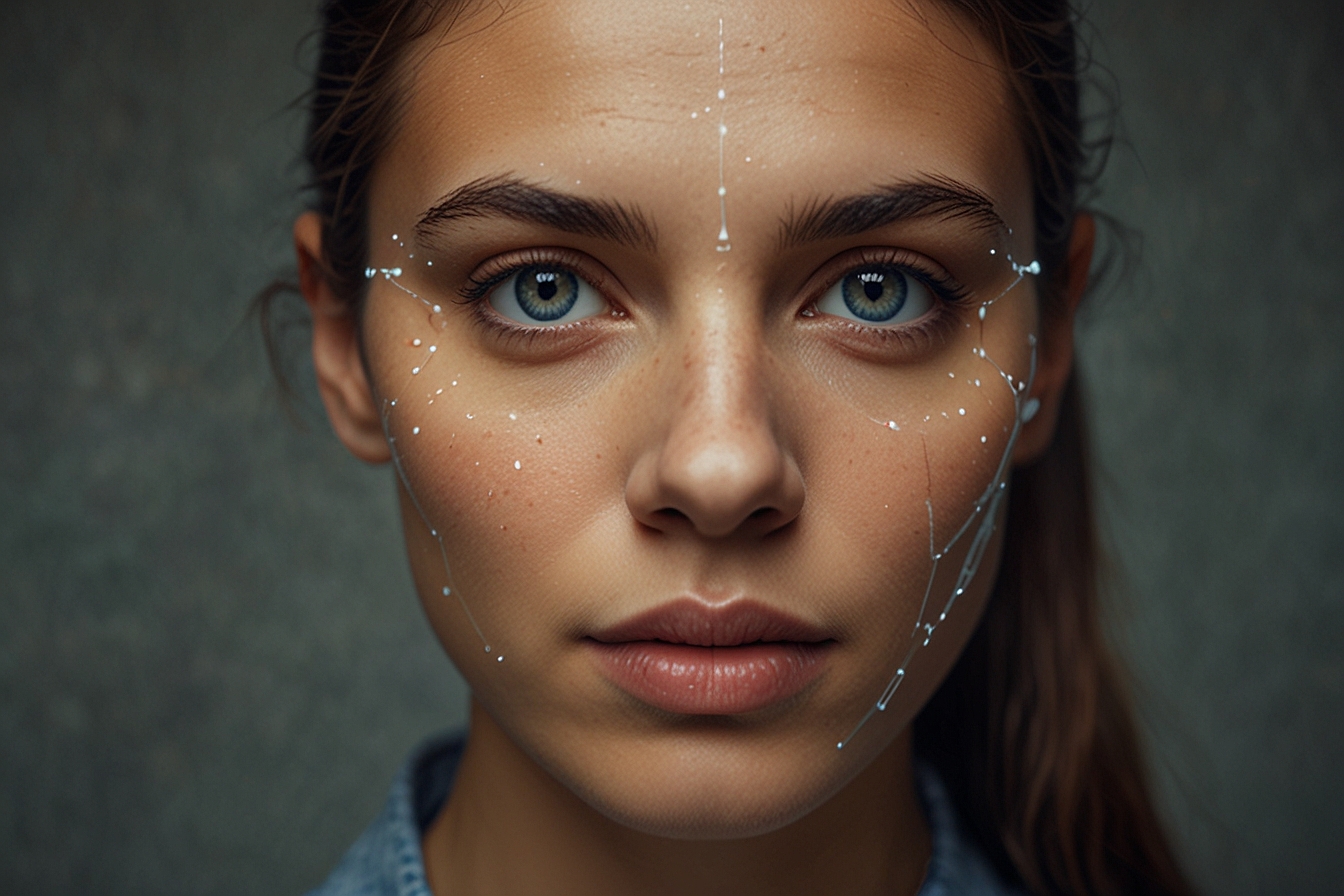
Modern facial recognition is not about taking a simple photo. It uses 3D depth mapping, infrared sensors, and neural networks to map hundreds of points on your face—distance between eyes, nose shape, jawline contour, and even underlying bone structure.
Keyword highlight: facial recognition, 3D depth mapping, infrared sensors, neural networks.
Liveness Detection: Stopping Spoofing
A critical advancement is liveness detection. The system checks for blood flow, subtle micro-movements, or challenges the user to blink or turn their head. This prevents attacks using printed photos, masks, or videos.
Current Applications
- Smartphone unlocking – Face ID on modern devices.
- Airport security – Automated border control gates.
- Banking apps – Facial login for high-value transfers.
- Retail payments – Smile-to-pay systems in select stores.
Keyword highlight: liveness detection, Face ID, automated border control, smile-to-pay.
Privacy and Ethical Considerations
Facial recognition has faced criticism over mass surveillance and algorithmic bias. Modern best practices require:
- On-device processing (no cloud uploads)
- Explicit user consent
- Regular bias testing across skin tones and genders
- Data deletion after failed attempts
4. Iris Scanning: The Gold Standard for High-Security Environments
Why the Iris Is Uniquely Reliable
The iris—the colored ring around your pupil—has over 200 unique feature points. It remains stable throughout adulthood and is virtually impossible to replicate. Even identical twins have different iris patterns.
Keyword highlight: iris scanning, unique feature points, high-security authentication, biometric stability.
How Iris Recognition Works
Near-infrared light illuminates the eye without discomfort. A camera captures high-resolution images, and algorithms map patterns like crypts, furrows, and collarette structures. The entire process takes less than two seconds.
Current-Generation Use Cases
- Data center access – Where server rooms require absolute identity assurance.
- Healthcare systems – Securing electronic health records (EHRs).
- National ID programs – Some countries issue iris-based digital IDs.
- Cryptocurrency custody – Vaults requiring multi-modal biometrics.
Limitations and Advances
Early iris scanners required close proximity and stillness. New systems work at a distance (up to 10 meters) and even through glasses or contact lenses. However, cost remains higher than facial recognition, limiting consumer device adoption.
Keyword highlight: near-infrared light, multi-modal biometrics, distance iris scanning, cryptocurrency custody.
5. Behavioral Biometrics: The Silent Guardian
What Are Behavioral Biometrics?
Behavioral biometrics continuously authenticate users based on how they interact with devices—without any active step like looking at a camera or touching a sensor. This is often called passive authentication or continuous verification.
Keyword highlight: behavioral biometrics, passive authentication, continuous verification, typing rhythm.
Key Behavioral Signals
Modern systems analyze dozens of parameters:
- Typing rhythm – Speed, dwell time (how long a key is pressed), flight time (between keys).
- Mouse movements – Acceleration, click pressure, trajectory.
- Touchscreen gestures – Swipe length, angle, finger pressure.
- Gait analysis – Walking pattern captured by smartphone accelerometers.
- Voice patterns – Spectral features and cadence.
Real-World Applications
- Banking fraud detection – If someone steals your session token but types differently, the system logs them out.
- Remote proctoring – Online exams verify the same test-taker throughout.
- Corporate VPN access – Behavioral profile must match the employee’s baseline.
Advantages Over Static Biometrics
Behavioral biometrics cannot be stolen in a data breach (because they are not stored as static templates). They work silently in the background, adding security without friction. And they adapt over time—your typing rhythm slowly evolving is normal; a sudden sharp change is suspicious.
Keyword highlight: fraud detection, remote proctoring, silent authentication, adaptive biometrics.
6. Comparing Biometric Modalities: Strengths and Trade-Offs
| Modality | Security Level | User Convenience | Spoof Resistance | Cost |
|---|---|---|---|---|
| Fingerprint | Medium-High | High (1 touch) | Medium (latex replicas) | Low |
| Facial Recognition | High | Very High (0.5 sec) | High (with liveness) | Medium |
| Iris Scanning | Very High | Medium (need alignment) | Extremely High | High |
| Behavioral | Medium (as primary) | Invisible | Very High (dynamic) | Medium |
Keyword highlight: fingerprint vs facial vs iris, spoof resistance, user convenience, cost comparison.
No single biometric is perfect. That is why the current trend moves toward multi-modal biometrics—combining two or more traits (e.g., face + voice) to reduce false acceptances and false rejections.
7. How Biometric Authentication Works Under the Hood
Enrollment Phase
- Capture – Sensor records raw biometric data (e.g., face image, typing sample).
- Feature extraction – Algorithm converts the raw data into a mathematical template.
- Storage – Template is stored securely, ideally in a hardware secure element (like the Secure Enclave on Apple devices) or encrypted locally.
Keyword highlight: biometric template, hardware secure element, feature extraction, local storage.
Verification Phase
- Live capture – User presents biometric (e.g., look at phone).
- New template generation – Same algorithm processes the live sample.
- Matching – System compares the new template to the stored template using a similarity score.
- Decision – Score above threshold = success; below = rejection.
On-Device vs. Cloud Processing
Current-generation best practice is on-device processing. Your face or iris never leaves your phone. Only an irreversible mathematical hash is stored. Cloud-based biometrics exist for enterprise systems but require rigorous encryption and compliance.
Keyword highlight: on-device processing, similarity score, encrypted storage, biometric hash.
8. Why Biometrics Are More Secure Than Passwords (But Not Perfect)
The Security Advantages
- No transmission – Biometrics are not sent over networks for verification.
- Non-repudiation – Strong link to a specific person.
- Difficult to phish – You cannot trick someone into giving their iris over email.
- Local storage – Mass breaches yield no usable biometric templates.
Known Vulnerabilities and Mitigations
| Attack Vector | Mitigation |
|---|---|
| Fake fingerprints (gelatin, clay) | Liveness detection (perspiration, pulse) |
| High-resolution photo or video | 3D depth sensing, infrared |
| Contact lens with printed iris | Iris texture analysis, motion detection |
| Replay attack (recorded voice) | Challenge-response (random phrase) |
| Behavioral mimicry | Machine learning on multiple parameters |
Keyword highlight: spoofing attacks, liveness detection, replay attack mitigation, anti-spoofing.
The Fallback Problem
Unlike passwords, you cannot reset a stolen biometric. That is why modern systems require:
- Multi-factor authentication (biometric + PIN for high-risk actions)
- Revocation mechanisms (e.g., fallback to password if biometric fails)
- Fusion of multiple biometrics (face + voice) to reduce single-point failure.
9. Real-World Applications Across Industries (Updated for Today)
Financial Services and Fintech
- Mobile banking – Facial login for balance checks; fingerprint for transactions under a threshold; behavioral monitoring for fraud.
- Cryptocurrency wallets – Iris or face scan to authorize large transfers.
- Payment cards with fingerprint sensor – Cardholder verification without PIN.
Keyword highlight: fintech biometrics, cryptocurrency wallet security, payment card fingerprint, mobile banking authentication.
Healthcare
- Electronic health records (EHRs) – Iris scanning for doctors accessing sensitive patient data.
- Telemedicine – Behavioral biometrics to verify patient identity throughout a virtual consultation.
- Pharmacy dispensing – Fingerprint to prevent prescription fraud.
Travel and Border Control
- Automated eGates – Facial recognition matching passport photos.
- Biometric boarding – No boarding pass needed; face is the token.
- Airport lounge access – Iris or fingerprint recognition.
Consumer Electronics
- Smartphones, tablets, laptops – Face, fingerprint, or iris unlock.
- Smart home devices – Voice recognition for personalized settings.
- Gaming consoles – Behavioral biometrics to detect account sharing.
Enterprise Security
- Workplace access – Iris or palm vein scanners for secure zones.
- Laptop login – Windows Hello, Mac Touch ID.
- VPN authentication – Combined fingerprint + behavioral.
Keyword highlight: eGates, telemedicine identity verification, smart home voice recognition, enterprise VPN biometrics.
10. Privacy, Data Protection, and Regulatory Compliance
The Biometric Data Risk
Biometric data is classified as sensitive personal data under regulations like GDPR, CCPA, and BIPA (Illinois Biometric Information Privacy Act). Organizations face severe penalties for mishandling it.
Keyword highlight: sensitive personal data, GDPR biometrics, BIPA compliance, CCPA.
Current Best Practices for Compliance
- Obtain explicit informed consent – Separate from general terms of service.
- Limit collection – Only what is necessary for the specific purpose.
- On-device processing – Avoid centralized biometric databases.
- Retention policies – Delete templates after account closure or inactivity.
- Transparency – Publish clear biometric data handling policies.
The Right to Refuse
Users must always have an alternative authentication method (e.g., strong password or hardware token). Biometrics should be optional, not mandatory, especially in employment or public service contexts.
11. The Future: Passwordless, Continuous, and Multi-Modal
Passwordless Ecosystems
Major platforms (Apple, Google, Microsoft) have committed to a passwordless future using passkeys synced across devices and authenticated via biometrics. You sign in with your face or fingerprint, and a cryptographic key does the rest.
Keyword highlight: passwordless future, passkeys, WebAuthn, FIDO2.
Continuous Authentication
Instead of one-time login, future systems will constantly verify using behavioral biometrics—your typing rhythm, mouse movements, even how you hold your phone. If anomalies appear, you are silently re-challenged.
Multi-Modal Fusion
Systems will combine face, voice, and behavior into a single fusion score. If lighting is poor for facial recognition, voice steps in. If you have a cold, behavioral takes over. This reduces false rejections dramatically.
Wearable Biometrics
Smartwatches and smart rings with photoplethysmography (PPG) sensors can authenticate using your unique heartbeat pattern (electrocardiogram or ECG). No action required—just wearing the device.
Anti-Spoofing Arms Race
As biometrics spread, so do deepfakes and generative AI attacks. The response is liveness detection 2.0—challenging users with unpredictable tasks (e.g., “smile, then look left”) and using passive sensors to detect skin reflectance and blood flow.
Keyword highlight: continuous authentication, fusion score, wearable biometrics, ECG authentication, liveness detection 2.0, deepfake defense.
12. Conclusion: Embrace the Biometric Shift
The move away from passwords is no longer a debate—it is an inevitability. Biometric authentication offers the current generation a rare combination: stronger security and better user experience. From facial recognition unlocking your phone in under a second to iris scanning protecting national infrastructure, and behavioral biometrics silently watching for fraud in the background, the technology has matured beyond science fiction.
However, biometrics are not a silver bullet. They must be deployed with privacy by design, multi-modal redundancy, and clear fallback mechanisms. When implemented correctly, they retire the password to the history books and usher in an era of frictionless, continuous, and trustworthy identity verification.
Final keyword highlight: biometric authentication, move away from passwords, facial recognition, iris scanning, behavioral biometrics, typing rhythm, passwordless future, continuous verification, privacy by design, multi-modal security.
Ready to go passwordless? Audit your current authentication methods. Implement biometric support where device capabilities exist. Educate users that their face, iris, or typing pattern is not just convenient—it is the most secure key they will ever carry.
https://www.youtube.com/@videotat-documentary
https://twitter.com/VideoTAT_docs
https://www.facebook.com/VideoTAT.1
https://www.pinterest.com/VideoTAT/