The Financial Empire: How North America Was Built on Risk, Resources, and Rebellion
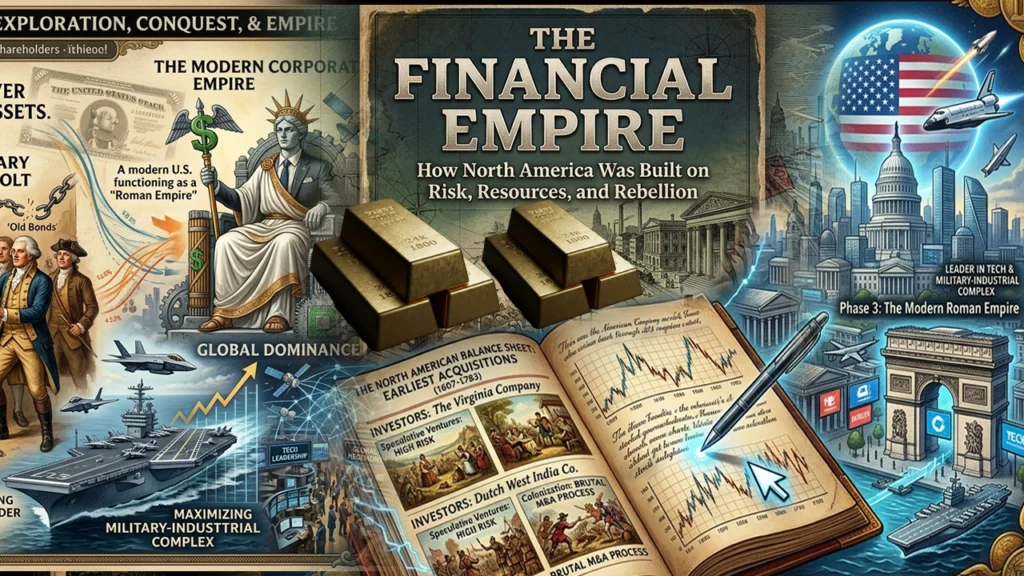
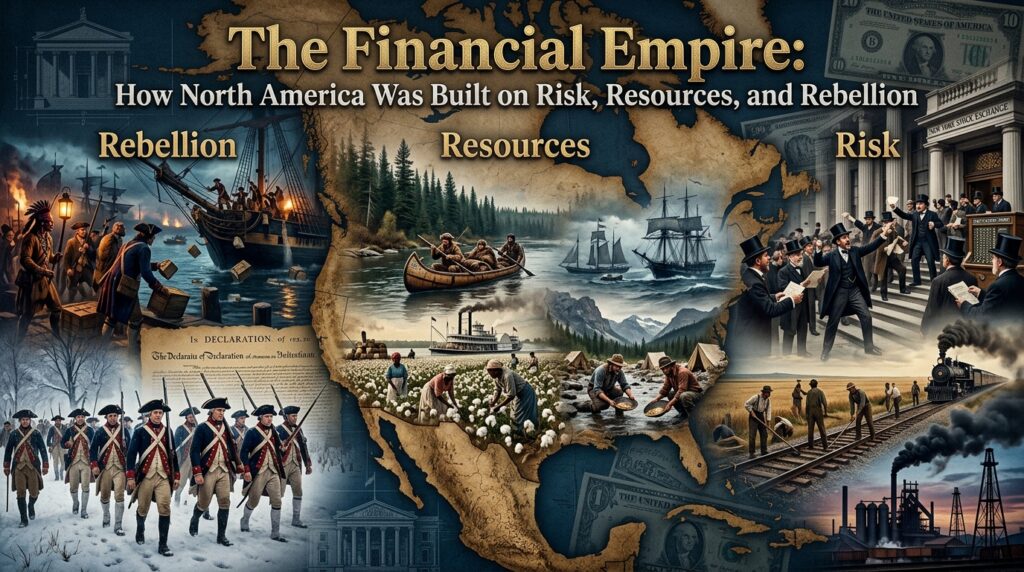
From a financial point of view, the story of North America is not merely a tale of exploration and conquest; it is a high-stakes corporate takeover spanning centuries. Early expeditions were speculative ventures, colonization was a brutal mergers-and-acquisitions process, and the birth of the United States represents the most successful hostile takeover of a superpower’s assets in modern history. Today, the U.S. functions as a modern Roman Empire, wielding the world’s most powerful military-industrial complex and leading in technological innovation. But to understand whether this giant can maintain its global dominance, we must audit its earliest balance sheets—starting with the first investors, the first crashes, and the first revolutionary shareholder revolt.
Part 1: The Pre-Market Economy – Native American Sophistication (Before 1492)
A Complex System of Governance and Trade
Before any European investor set foot on the continent, the Native American economies were anything but primitive. Hundreds of thousands of people had developed sophisticated systems of society, governance, and trade across diverse regions. From the Iroquois Confederacy’s democratic constitution (which later inspired American revolutionaries) to the Pueblo’s irrigation networks in the Southwest, these were not simple hunter-gatherer societies but established economic zones. They managed natural resources—maize, beans, squash, furs, and timber—with sustainable practices that would make any modern ESG (Environmental, Social, Governance) fund take notice.
The First (Forgotten) Explorer: A Viking Hedge Fund
The first European to spot the potential of this “unknown land” was not an Italian working for Spain, but a Norse navigator named Leif Erikson. After a fellow trader, Bjarni Herjólfsson, was blown off course and accidentally sighted Newfoundland, Erikson organized a private expedition. He established a small settlement in Labrador called L’Anse aux Meadows (or “Meadows Cove”). From a financial viewpoint, this was a failed startup: the settlement was abandoned after about twenty years due to supply chain issues and hostile relations with local stakeholders. The return on investment (ROI) was negative, and the knowledge of this “market” was lost for nearly 500 years.
Part 2: The Age of Exploration – High-Risk Venture Capital (1492–1607)
Columbus’s Disastrous IPO
In the late 15th century, European powers were desperate for a direct route to India—the ultimate source of spices and silk. Think of India as the monopoly market of the era. The King and Queen of Spain acted as angel investors for a Genoese navigator named Christopher Columbus. His pitch? A shorter, faster route westward. In reality, Columbus discovered the West Indies and, without knowing it, opened a new frontier for exploitation. Florentine explorer Amerigo Vespucci—a brilliant cartographer and marketer—sold maps of these discoveries, successfully branding the entire hemisphere “America.” Vespucci is the ultimate example of branding beating reality: he got two continents named after him despite not being the first to discover them.
The Race to Map the East Coast: A Competitive Market
By the dawn of the 16th century, the Spanish, English, Portuguese, Swedish, Dutch, and French entered a frantic race to explore and claim the North American east coast. Key players included:
- John Cabot (Giovanni Caboto): Hired by English investors, he “rediscovered” Newfoundland. Since Erikson’s records were lost, Cabot got the credit—proving that patents and documentation are everything.
- Spanish expeditions (Ponce de León, Cabeza de Vaca, Hernando de Soto) mapped Florida and the Southeast, preparing for permanent colonies.
- French explorers (Jacques Cartier, Giovanni da Verrazzano) charted the St. Lawrence River and the eastern seaboard.
First Contact: A Deadly Merger
Early interactions between Europeans and Native Americans were a mix of gift exchanges and violent skirmishes. But the most devastating financial consequence was biological: European diseases (smallpox, influenza) wiped out an estimated 90% of indigenous populations. From a human capital perspective, this created a massive labor vacuum that Europeans would later fill with enslaved Africans. This was not just a tragedy; it was the single largest demographic collapse in human history, fundamentally reshaping the supply and demand for land and labor.
Part 3: The First Startups – Failed Colonies and Learning Curves (1585–1607)
Roanoke: The Lost Colony (A Total Write-Off)
The English made their first serious attempt at a permanent colony on Roanoke Island (present-day North Carolina). The initial expedition was a disaster: colonists burned down a local Native village and, after a miserable winter, abandoned the site. A second wave of colonists—middle-class Londoners with zero military experience—arrived and vanished. The only clue was the word “CROATOAN” carved into a palisade post. From an investor’s perspective, Roanoke was a complete loss of capital. The colony was deemed “lost” by the English government, and the mystery remains unsolved. The key lesson: without supply chain security and local relations, your venture will fail.
The French and Spanish Competition
- French Huguenots attempted a colony in Florida (1564) – sacked by Spain, all males killed.
- Spanish St. Augustine (1565) – Considered the first successful permanent European settlement in North America. Why? Because the Spanish treated it like a military garrison, not just a trading post.
Part 4: The First Successful English IPO – Jamestown (1607)
A Swamp, No Gold, and Disease
The London Company (a joint-stock company) funded the settlement of Jamestown in Virginia. They chose a marshy region on the James River. Initial results were terrible: no gold, plenty of disease, and poor coordination. The local Powhatan tribe offered food, but the colonists were obsessed with searching for precious metals. This is a classic misallocation of resources.
Captain John Smith: The Turnaround CEO
The colony only survived when Captain John Smith took command with a dictatorial management style. He reorganized efforts to:
- Establish trade with the natives.
- Plant crops for local consumption.
- Enforce discipline (“he that will not work, shall not eat”).
Smith returned to England, but his strategic plan allowed Jamestown to endure the “starving time” and eventually thrive. Jamestown became the first permanent English settlement in North America—proof that strong leadership and diversification (farming + trade + defense) could overcome a terrible location.
The Arrival of Slavery: A New Financial Model
In 1619, a Dutch privateer captured enslaved Africans from a Spanish ship and brought them to Point Comfort, Virginia. Twenty to thirty individuals were sold or traded to Jamestown. While slavery had existed in the New World since the mid-16th century, this moment marked the beginning of two and a half centuries of chattel slavery in what would become the United States. From a financial viewpoint, slavery became the most brutal and profitable “asset class” in colonial history, fueling the cotton, tobacco, and sugar economies—and creating a moral liability that would eventually tear the nation apart.
Part 5: The Pilgrims’ Merger – Plymouth and the Mayflower Compact (1620)
Religious Freedom vs. Financial Motivation
Unlike Jamestown’s profit-driven London Company, the Pilgrims (Puritans) who sailed on the Mayflower were seeking religious freedom. They landed far north of their intended destination and, fearing legal chaos, drafted the Mayflower Compact. This document was essentially a shareholder agreement: they pledged to self-govern while remaining loyal to the English Crown.
Strategic Alliances: Squanto and Massasoit
The Pilgrims’ survival depended entirely on local partnerships. They settled in an abandoned Patuxet village—ironic, because that tribe had been wiped out by disease. A Patuxet man named Squanto (Tisquantum), who had been kidnapped, taken to Europe, and learned English, served as interpreter and dealmaker. He brokered a non-aggression pact between the Pilgrims and Chief Massasoit of the Wampanoag tribe.
The First Thanksgiving: A PR Success
In the fall of 1621, the Pilgrims and Wampanoag celebrated a three-day feast—now known as the first Thanksgiving. From a modern public relations perspective, it was a masterstroke: a narrative of cooperation that obscures decades of subsequent conflict. But at the time, it was a genuine mutual aid agreement that allowed both parties to survive.
Part 6: The Dutch and English Corporate Wars (1624–1664)
New Netherland and the $24 Deal
The Dutch West India Company established New Netherland (present-day New York and New Jersey). In 1624, they purchased Manhattan Island from the Munsee Lenape tribe for trade goods worth approximately $24 (in modern terms, a shockingly low valuation). They built Fort Amsterdam at the southern tip, and the settlement became New Amsterdam—a city built on trade, hydro power, and commerce.
The English Hostile Takeover
New Amsterdam was a tempting target. In 1664, four English frigates sailed into the harbor and demanded surrender. The Dutch surrendered bloodlessly, sparking the Second Anglo-Dutch War. New Amsterdam was reincorporated under English law and renamed New York City. This was not a military conquest so much as a corporate acquisition: the English simply outmaneuvered the Dutch in the game of global finance.
Part 7: The French and Spanish Empires – Competing Conglomerates
New France: The Fur Monopoly
France focused on the St. Lawrence River valley, establishing Quebec, Trois-Rivières, and Montreal. They controlled the fur trade—a highly profitable commodity market in Europe. French influence extended down the Mississippi River, founding Nouvelle-Orléans (New Orleans) in 1718. New Orleans became the gateway to the Mississippi, a strategic asset controlling transportation of goods from the interior.
New Spain: The Silver Giant
Spain’s North American empire covered much of the Deep South, Southwest, and West. Their financial engine was silver mining in Mexico, supplemented by ranching and missions. Unlike the English model of private joint-stock companies, Spain ran its colonies as a royal monopoly—which limited innovation but ensured steady, if slow, growth.
Part 8: The Birth of a New Nation – The Ultimate Spin-Off (1776)
The American Revolution: A Shareholder Revolt
By the mid-18th century, the thirteen English colonies had grown into a mature economic powerhouse. But they suffered from taxation without representation—a classic stakeholder grievance. The British Crown imposed taxes (Stamp Act, Tea Act) to pay for wars fought on the colonists’ behalf. The colonists saw this as a breach of contract.
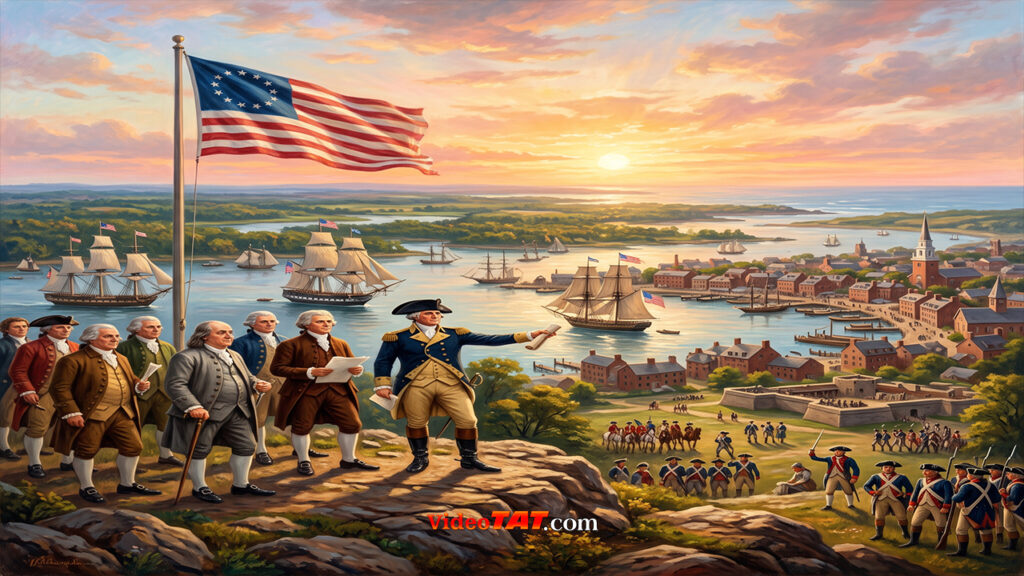
On July 4, 1776, the Second Continental Congress adopted the Declaration of Independence, written primarily by Thomas Jefferson. This was the corporate spin-off event: the colonies declared themselves a new nation, the United States of America, free from British control. The ensuing Revolutionary War (1775-1783) was the costly legal battle to make that spin-off a reality.
Why the U.S. Succeeded
Post-independence, the U.S. implemented a constitutional republic with:
- Property rights protected by law.
- A patent system encouraging innovation.
- A central bank (after initial struggles) to manage credit.
- Westward expansion (often through violent displacement of Native Americans) to acquire land and resources.
These factors transformed the U.S. from a fragile startup into the world’s largest economy by the early 20th century.
Part 9: The Modern Roman Empire – Can Dominance Continue?
Military and Technological Supremacy
Today, the United States possesses:
- The most powerful military in modern history (a budget larger than the next ten countries combined).
- Countless astonishing human accomplishments: landing on the Moon, inventing the internet, leading the AI revolution, and dominating biotechnology, aerospace, and finance.
The U.S. dollar remains the world’s primary reserve currency, giving the U.S. an exorbitant privilege to borrow cheaply and project power globally.
The Challenges Ahead
But can this giant continue its dominance? Several financial and structural risks loom:
- National debt exceeding $34 trillion – a leverage issue that could crowd out future investment.
- Political polarization – a governance risk that undermines long-term planning.
- Aging infrastructure and supply chain vulnerabilities exposed by recent global disruptions.
- Rising competitors (China, India, the EU) who are investing heavily in green energy, semiconductors, and digital currencies.
- Social inequality – a human capital risk that reduces overall productivity and stability.
The Verdict
From a financial point of view, the U.S. remains the world’s most diversified and innovative economic conglomerate. It has survived civil war, depression, pandemics, and global conflicts. Whether it can maintain its global dominance depends on its ability to:
- Manage its debt without stifling growth.
- Invest in education and infrastructure to maintain a competitive workforce.
- Adapt to a multipolar world where no single nation calls all the shots.
The story of this fascinating land began with a few desperate colonists and a handful of investors. Today, the United States is a $25 trillion economy—but as any financial analyst knows, past performance is no guarantee of future results. The next chapter is still being written.
Keywords highlighted: financial point of view, high-stakes corporate takeover, mergers-and-acquisitions, hostile takeover, military-industrial complex, technological innovation, global dominance, balance sheets, shareholder revolt, Native American economies, sophisticated systems, sustainable practices, ESG fund, private expedition, failed startup, supply chain issues, return on investment (ROI), angel investors, branding beating reality, patents, human capital perspective, labor vacuum, supply and demand, permanent colony, total loss of capital, joint-stock company, misallocation of resources, turnaround CEO, strategic plan, asset class, moral liability, shareholder agreement, local partnerships, public relations, mutual aid agreement, corporate acquisition, commodity market, royal monopoly, stakeholder grievance, breach of contract, corporate spin-off, constitutional republic, property rights, patent system, central bank, westward expansion, economy, military, AI revolution, biotechnology, aerospace, reserve currency, exorbitant privilege, leverage issue, governance risk, supply chain vulnerabilities, green energy, digital currencies, human capital risk, economic conglomerate, manage its debt, multipolar world.
https://www.youtube.com/@videotat-documentary
https://twitter.com/VideoTAT_docs
https://www.facebook.com/VideoTAT.1
https://www.pinterest.com/VideoTAT/