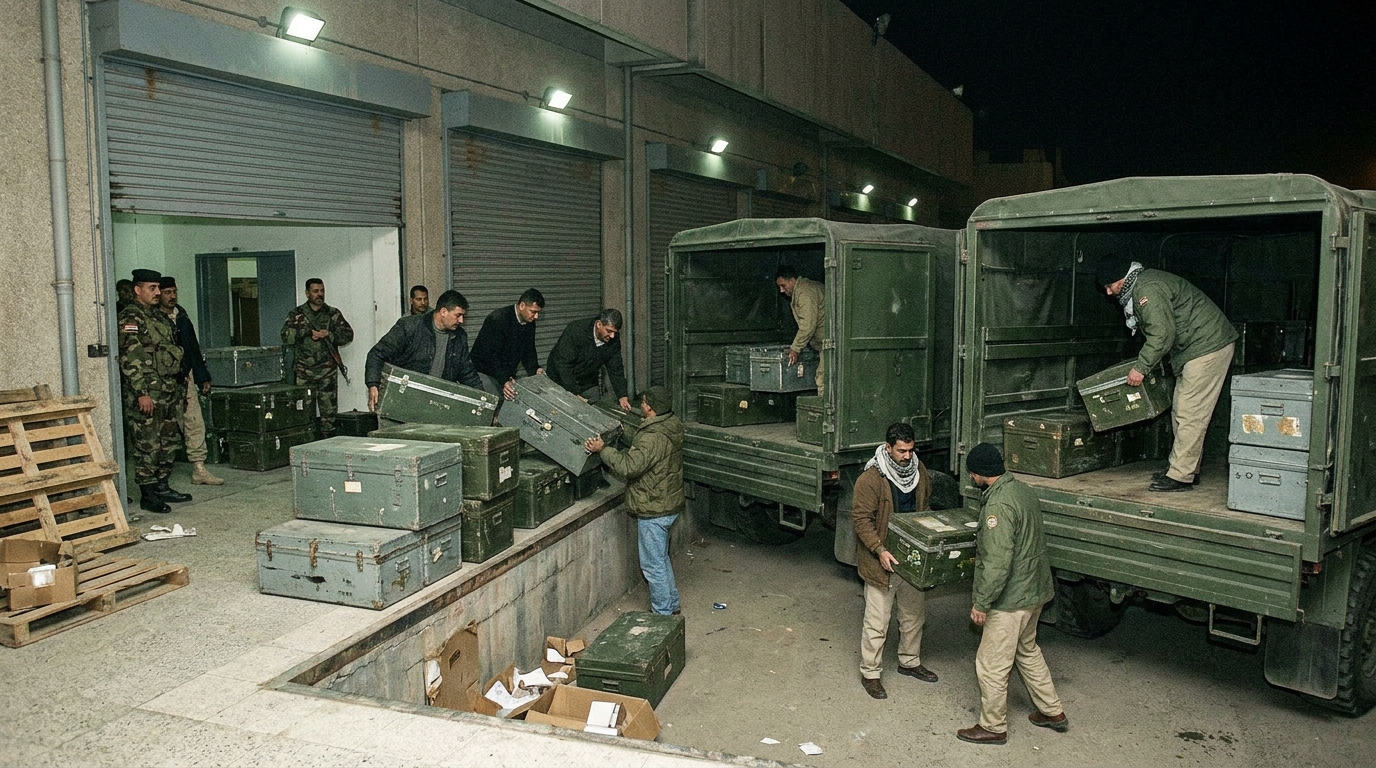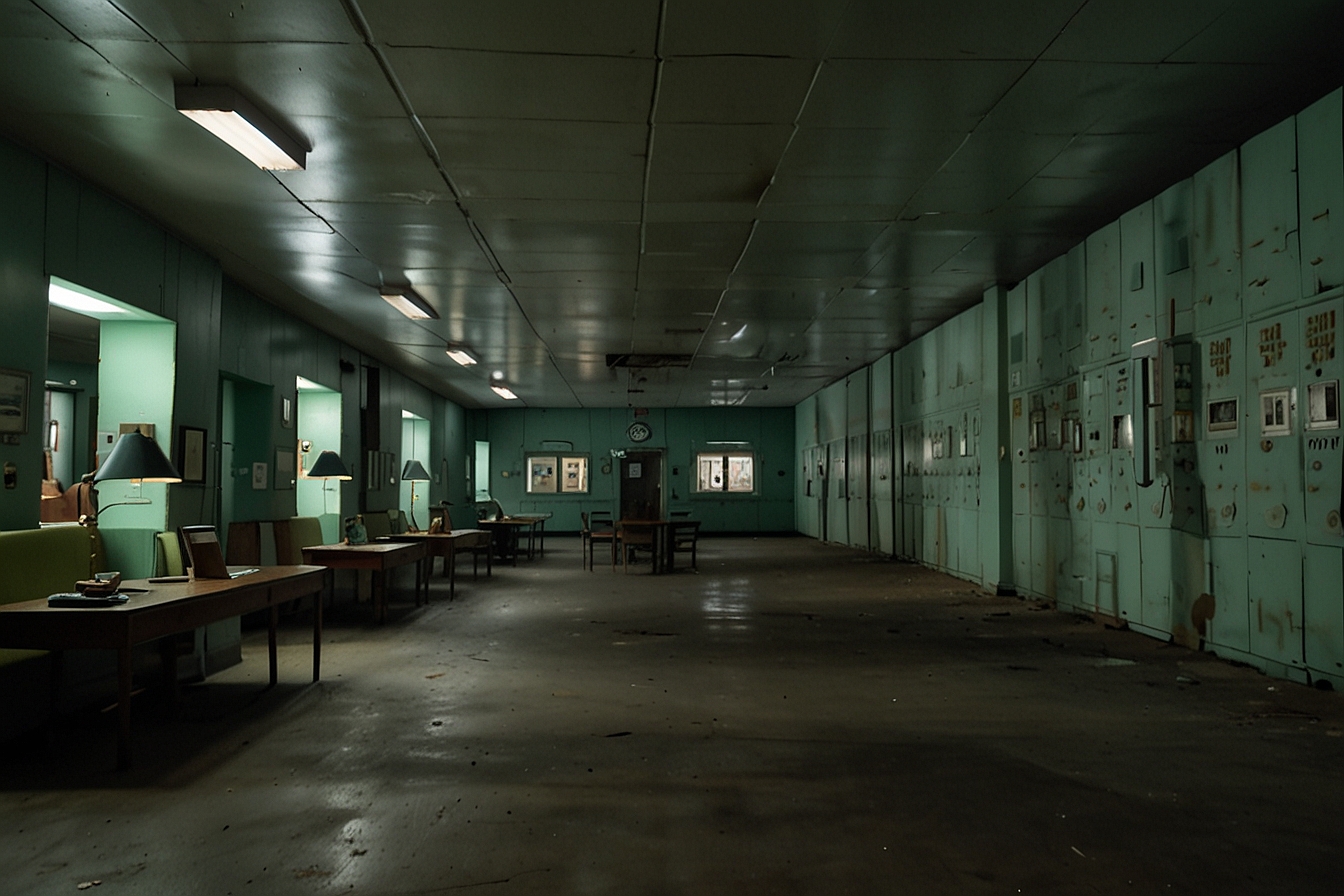
The Greenbrier Bunker’s Secret Economy: Inside the U.S. Government’s Cold War Relocation Facility and Its Post-Apocalypse Financial Logistics
Buried deep beneath the lush mountains of West Virginia lies one of America’s most intriguing secrets: a massive underground bunker designed to house the entire U.S. Congress in the event of a nuclear war. Known as The Greenbrier Bunker, this Cold War relocation facility was built to ensure the continuity of government. But beyond the blast doors, decontamination chambers, and sleeping quarters, there existed a hidden world of financial logistics—a shadow economy ready to be activated after the apocalypse.
How would the government manage currency, pay its employees, and stabilize the economy if the surface world were reduced to rubble? This article explores the secret economy of the Greenbrier Bunker, from emergency currency reserves to post-disaster monetary policies, and examines what lessons it holds for today’s generation facing modern threats like cyberattacks, pandemics, and infrastructure collapse.
Part 1: The Hidden City – A Brief History of the Greenbrier Bunker
1.1 A Resort Above, a Bunker Below
The Greenbrier is a luxury resort in White Sulphur Springs, West Virginia, famous for its mineral springs, golf courses, and past guests including presidents and royalty. But for over three decades, a top-secret facility operated directly underneath its West Virginia Wing. From the late 1950s through the early 1990s, the U.S. government’s Cold War relocation facility sat ready 24/7, hidden from public view.
- Size: Over 112,000 square feet (roughly two football fields)
- Capacity: Designed to hold 1,100 people—primarily members of Congress and their staff
- Blast protection: 25-ton blast doors, 5-foot-thick concrete walls
- Self-sufficiency: Independent water, power, and air filtration systems
The bunker was built under the guise of an “addition” to the resort. In reality, it was a fully operational continuity of government (COG) site, ready to be activated within hours of a nuclear attack.
1.2 The Declassification and Modern Relevance
The bunker’s existence remained classified until 1992, when a newspaper investigation revealed it to the public. Today, parts of the facility are open for tours, but its lessons are far from outdated. In an era of cyber warfare, electromagnetic pulse (EMP) threats, and climate-driven instability, the question of how a government survives—and how its economy functions—has returned to the forefront of national security planning.
Part 2: The Secret Economy – Financial Logistics in the Bunker
2.1 Why a Bunker Economy Was Necessary
Imagine a nuclear exchange. Cities are gone. Banks are vaporized. Electronic records are fried by EMPs. Credit cards are useless. ATMs are silent. In such a scenario, the U.S. government would need to:
- Pay military personnel and essential civilian workers
- Purchase supplies (food, fuel, medicine) from unaffected regions
- Prevent hyperinflation and looting
- Maintain public confidence in the dollar
The Greenbrier Bunker’s secret economy was designed to solve these problems using pre-printed currency, physical ledgers, and post-apocalypse financial protocols.
2.2 Emergency Currency Reserves: The Cash That Was Never Spent
One of the most closely guarded secrets of the relocation facility was its stockpile of emergency currency. The Bureau of Engraving and Printing had prepared special series of U.S. banknotes—sometimes referred to as “apocalypse cash”—that would be introduced only after a catastrophic attack.
Key features of emergency currency:
- Non-sequential serial numbers – to prevent tracking and counterfeiting
- Distinct design elements – to differentiate from pre-crisis money
- Limited distribution – only to authorized government and military personnel
In addition to paper currency, the bunker stored large quantities of coins (especially quarters and dimes), because in a post-apocalyptic economy, small change would be essential for daily transactions. There were even plans to use food vouchers and fuel ration coupons as supplementary currency.
2.3 Paying Congress and Essential Staff
If the bunker were activated, each member of Congress and their designated staff would receive a survival payroll—a fixed amount of emergency cash intended to last for a specific period (usually 30 to 90 days). Payments were calculated based on:
- Rank and role (e.g., Speaker of the House vs. junior staff)
- Dependents (some family members would have been evacuated separately)
- Operational needs (e.g., military liaisons received higher stipends)
All payments were recorded in physical ledgers using carbon-copy forms. No computers. No electronic transfers. The bunker’s financial officers carried out these transactions with manual typewriters and hand-counted cash.
2.4 The Role of the Treasury and Federal Reserve in the Bunker
The Greenbrier Bunker was not just a shelter for politicians. It also contained a small but critical detachment from the U.S. Treasury and a liaison from the Federal Reserve. Their mission: to preserve the monetary base of the United States.
Responsibilities included:
- Safeguarding emergency currency from theft or decay
- Authorizing payments to essential contractors (e.g., food suppliers, fuel transporters)
- Destroying damaged currency and issuing replacements
- Communicating with other COG sites (e.g., Mount Weather, Raven Rock) to coordinate national financial policy
These officials operated under a pre-signed set of executive orders and emergency banking acts that would be activated automatically upon confirmation of a nuclear attack.
Part 3: Post-Apocalypse Monetary Policy – How It Would Have Worked
3.1 Currency Revaluation and the “New Dollar”
One of the most radical plans hidden within the bunker’s financial logistics was the possibility of a currency revaluation. After a large-scale nuclear war, the pre-war dollar might become nearly worthless due to hyperinflation, loss of confidence, or massive counterfeit from destroyed printing facilities.
The government prepared for a “New Dollar” – a temporary currency that would:
- Be backed by strategic reserves (oil, grain, gold stored in other secure locations)
- Have an exchange rate set by emergency decree (e.g., 1,000 old dollars = 1 new dollar)
- Be legal tender only in unoccupied U.S. territory
This concept is strikingly similar to modern discussions about digital currencies and crisis-era monetary reset—topics that resonate with today’s generation concerned about inflation, bank failures, and the fragility of fiat money.
3.2 Barter, Scrip, and Rationing: The Backup Plans
In the most extreme scenarios—where even emergency currency lost value—the bunker’s financial logistics shifted to a ration-based economy. Pre-printed ration coupons for food, water, fuel, and medicine would have served as a form of scrip (company or government-issued substitute currency).
Other planned measures included:
- Fuel tickets – redeemable for gasoline at military depots
- Medical vouchers – for antibiotics, bandages, and vaccines
- Labor chits – exchangeable for work details (construction, farming, security)
Interestingly, the bunker also stored a limited amount of silver coins (dimes, quarters, half-dollars from pre-1965) because silver retains value even if paper currency collapses. This “junk silver” would have served as a hedge against total monetary failure—a lesson that modern preppers and crypto investors continue to debate today.
3.3 Communication with the Outside Economy
A bunker is useless if it cannot talk to the rest of the country. The Greenbrier facility had multiple redundant communication systems, including:
- Underground telephone cables (hardened against EMP)
- High-frequency (HF) radio for long-distance broadcasts
- Courier relays – motorcycle and helicopter messengers carrying physical pay packets
These systems allowed the bunker’s financial officers to send authorization codes to regional Treasury offices, military payroll centers, and even some banks that had survived in hardened vaults. In essence, the bunker was designed to be the heart of a dead financial system, pumping emergency cash and orders through a shattered network of arteries.
Part 4: Relevance for Today’s Generation
4.1 Modern Threats, Old Solutions
The Cold War may be over, but the threats have evolved. Today, the continuity of government planning includes scenarios far beyond nuclear war:
- Cyberattacks on the Federal Reserve’s payment systems (e.g., the 2021 Colonial Pipeline ransomware attack showed how vulnerable infrastructure is)
- Electromagnetic pulse (EMP) from a solar flare or high-altitude nuclear detonation, which could fry all electronics
- Pandemics that incapacitate bank employees and supply chains
- Civil unrest leading to bank runs and ATM shortages
In response, modern COG facilities (many still classified) continue to maintain emergency currency reserves, manual accounting systems, and alternative payment mechanisms like digital vouchers stored on offline hardware.
4.2 What the Greenbrier Bunker Teaches Today’s Investors
For the current generation—raised on Venmo, cryptocurrency, and contactless payments—the Greenbrier Bunker’s secret economy offers a stark reminder: cash is still king in a crisis.
Key lessons:
- Diversify your emergency fund – Keep some physical cash (small bills) at home, along with a few silver coins or a small amount of gold.
- Understand that digital payments can fail – A cyberattack or power outage can render your phone useless.
- Learn basic barter skills – In a true post-apocalypse, fuel, medicine, and ammunition may be more valuable than dollars.
- Know where your government’s continuity sites are – While most are still secret, understanding COG planning helps you gauge how long a collapse might last.
4.3 The Bunker’s Legacy in Pop Culture and Policy
The Greenbrier Bunker has inspired countless movies, TV shows, and novels—from The 100 to Jericho to 10 Cloverfield Lane. But its real legacy is in the unseen infrastructure that still exists today: hardened bunkers in rural Virginia, Pennsylvania, and Colorado, each with their own financial logistics plans.
While the public now tours the declassified West Virginia facility, classified COG sites continue to prepare for the worst. Some reports suggest that modern bunkers hold micro-printed emergency currency and even offline cryptocurrency wallets—a fusion of Cold War paranoia and 21st-century fintech.
Part 5: Key Takeaways – The Greenbrier Bunker’s Secret Economy
| Aspect | Details |
|---|---|
| Primary Purpose | Continuity of government (COG) during nuclear war |
| Hidden Economy | Emergency currency reserves, physical ledgers, ration coupons |
| Currency Type | Special series of U.S. banknotes + pre-1965 silver coins + scrip |
| Payment System | Manual payroll, carbon-copy forms, courier deliveries |
| Monetary Fallbacks | Currency revaluation (New Dollar), barter, fuel and food tickets |
| Modern Relevance | Cyberattacks, EMP threats, pandemic planning, digital payment fragility |
| Lessons for Today | Keep physical cash, diversify holdings, understand barter, prepare for offline scenarios |
Conclusion: The Ghost Economy Beneath the Resort
The Greenbrier Bunker’s secret economy was not a fantasy. It was a real, meticulously planned financial logistics system designed to keep the United States functioning after the unthinkable. From pre-printed apocalypse cash to silver coin stockpiles and ration-based scrip, every detail was considered—right down to how to pay a member of Congress for a 90-day stay underground.
Today, as we face a new generation of threats—cyber warfare, infrastructure collapse, climate emergencies—the bunker’s lessons are more urgent than ever. The machines that process our digital payments are fragile. The banks that hold our money rely on power grids and internet cables. And while we may laugh at the idea of carrying silver dimes in a bug-out bag, the planners of the Cold War understood a truth that remains unchanged: when civilization shakes, the economy falls back on the simplest tools—cash, trust, and preparation.
Whether you are an investor, a prepper, or just a curious reader, the hidden city beneath the Greenbrier resort invites you to ask one question: If the worst happens tomorrow, would your money survive?
https://www.videotat.com/category/business