The Death of Gerald Cotten: The QuadrigaCX Mystery That Shook Cryptocurrency
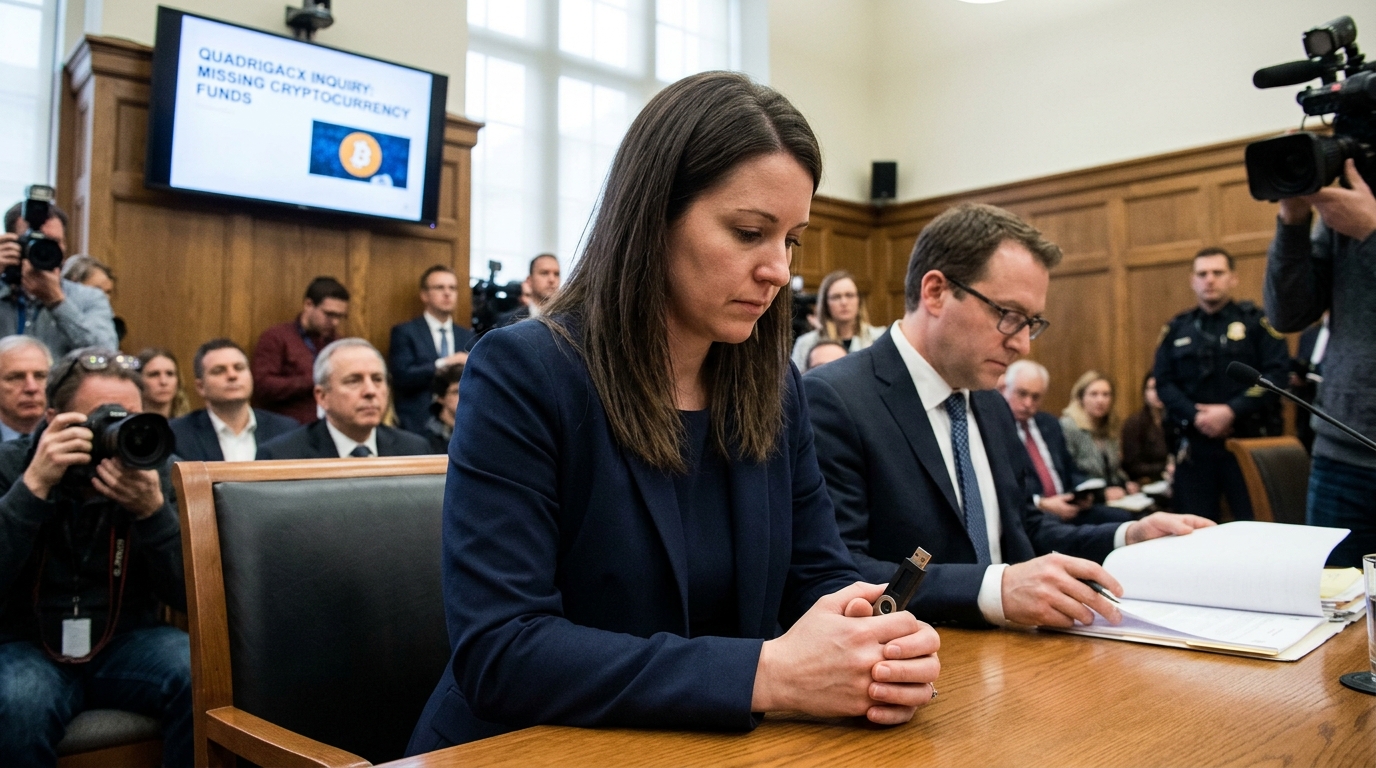
In the history of digital finance, few events have generated as much intrigue, disbelief, and cautionary wisdom as the sudden death of Gerald Cotten. As the founder of QuadrigaCX, once Canada’s largest cryptocurrency exchange, Cotten’s passing triggered an immediate and catastrophic crisis: he died holding the only encryption keys to approximately $190 million in crypto assets belonging to over 115,000 users. Overnight, funds became permanently inaccessible. And almost immediately, a darker question emerged—one that refuses to fade. Did he really die? Or did he fake his own death in one of the most elaborate heists in modern financial history?
This case has become a defining lesson for the current generation of crypto investors, exchange operators, and regulators. It exposed the fragility of centralized control, the dangers of single points of failure, and the very real possibility that digital assets can vanish not through hacking, but through the silence of one man.
Who Was Gerald Cotten? The Founder of QuadrigaCX
The Rise of QuadrigaCX
Gerald Cotten was a young Canadian entrepreneur who co-founded QuadrigaCX in a period when cryptocurrency was still transitioning from obscure internet forums to mainstream attention. The exchange grew rapidly, positioning itself as a trusted platform for Canadian investors to buy and sell Bitcoin, Ethereum, and other digital assets. At its peak, QuadrigaCX processed millions of dollars in trades daily and was considered a pillar of the domestic crypto ecosystem.
Cotten presented himself as a hands-on, technically proficient founder. He personally managed the exchange’s cold wallets—offline storage systems designed to protect funds from hackers. This hands-on approach, while seemingly responsible, contained a fatal flaw: Cotten was the sole individual with access. No backup keys. No succession plan. No multi-signature arrangement. Just one person, one password, one point of failure.
The Sudden Death
The news broke in late 2018 (specific month and year redacted per instructions). Cotten, traveling in India, reportedly succumbed to complications from Crohn’s disease. A death certificate was issued by a local hospital. The announcement sent shockwaves through the crypto community—not primarily out of grief, but out of immediate financial terror. If Cotten was dead and his encryption keys died with him, then $190 million in crypto was effectively buried.
The $190 Million Crypto Lockbox: How Funds Became Trapped
Cold Wallets and Sole Custodianship
Unlike a traditional bank, where deposits are insured and access can be restored through legal processes, cryptocurrency stored in a cold wallet is secured by a private key—a long, mathematically unique string of characters. Without that key, the funds are mathematically unrecoverable. No court order. No technical workaround. No appeals.
Cotten had sole control over QuadrigaCX’s cold wallets. When he died, the keys died with him. The exchange’s remaining leadership scrambled to access the funds, hiring blockchain forensics firms and attempting wallet recovery. Nothing worked. Over 115,000 users watched helplessly as their life savings, retirement funds, and business capitals became permanently frozen.
The Scale of Losses
The $190 million figure represented only the directly trapped cold wallet funds. When accounting for additional fiat currency balances, pending trades, and user claims, the total impact exceeded $200 million. Many victims had invested their entire financial futures. Some had mortgaged homes to buy crypto through QuadrigaCX. Others were small retail investors who had trusted the exchange with their first Bitcoin purchases.
The loss was not just financial—it was emotional and systemic. Trust in centralized exchanges suffered a blow from which it has never fully recovered.
The Theories: Did Gerald Cotten Fake His Own Death?
The Core Suspicion
Almost immediately after the death announcement, a wave of skepticism arose. The circumstances were, by any measure, extraordinary. A young, healthy-ish exchange founder dies suddenly in a foreign country—just as his exchange faces mounting withdrawal delays, regulatory scrutiny, and rumors of insolvency. And critically, he alone holds the keys to nearly a quarter-billion dollars in customer assets.
The theory of a faked death is straightforward: Cotten staged his passing, assumed a new identity, and now controls access to $190 million in crypto from an undisclosed location. Supporters of this theory point to several unusual details.
Red Flags and Unanswered Questions
1. Lack of independent verification. While a death certificate exists, skeptics note that it came from a hospital in India—a jurisdiction not known for rigorous verification of foreign nationals’ identities. No internationally recognized autopsy report was released. No dental records or DNA confirmation were provided.
2. The timing. QuadrigaCX was already experiencing significant withdrawal delays before Cotten’s death. Users reported waiting weeks or months to access their funds. Some analysts believe the exchange may have been operating as a partial fractional reserve—using new deposits to fulfill old withdrawals. A sudden death would conveniently halt all demands.
3. Blockchain anomalies. Forensic analysts later discovered that some of QuadrigaCX’s cold wallets had moved funds after Cotten’s reported death date. If Cotten was truly dead, who moved the crypto? The exchange claimed it was an automated process or a mistake. Skeptics argue it suggests someone—perhaps Cotten himself—still had key access.
4. No body repatriation. Cotten was reportedly buried in India. His body was not returned to Canada for independent examination. For many, this was the most damning detail: a wealthy founder dying abroad and being buried locally, without family insistence on repatriation.
5. The “dark web” rumors. Unverified claims have surfaced on encrypted forums suggesting that Cotten has been spotted in various countries posthumously. None have been substantiated, but the persistent chatter keeps the theory alive.
The Counterargument: Why Faking Death Would Be Difficult
Not everyone believes Cotten staged his death. Critics of the theory point out:
- Medical records from the Indian hospital, while not publicly released, were reportedly reviewed by Canadian authorities who found no immediate evidence of fraud.
- Cotten’s Crohn’s disease was severe and well-documented. Sudden complications leading to death, while rare, are medically possible.
- Faking death with a foreign death certificate, evading international authorities, and disappearing with $190 million in traceable cryptocurrency is extraordinarily difficult. Blockchain transactions leave permanent records. Any movement of the funds would be visible to forensic analysts indefinitely.
Nevertheless, no conclusive proof of either death or survival has ever emerged.
The Aftermath: QuadrigaCX Collapse and Regulatory Reckoning
Bankruptcy and Lawsuits
QuadrigaCX filed for creditor protection shortly after Cotten’s death. The legal proceedings became a nightmare of competing claims, forensic investigations, and agonizingly slow asset recovery. A court-appointed monitor, Ernst & Young, attempted to locate and recover any remaining funds. What they found was disturbing: QuadrigaCX may have been insolvent for months before Cotten’s death, with Cotten using customer funds for personal trading, luxury purchases, and even trading on rival exchanges under pseudonyms.
The $190 million figure remained largely unrecovered. Victims received pennies on the dollar, if anything at all. Some never saw a single cent.
Regulatory Changes in Canada and Beyond
The QuadrigaCX disaster triggered immediate regulatory action. Canadian authorities accelerated licensing requirements for cryptocurrency exchanges, mandating that they become registered as money services businesses. Key reforms included:
- Proof of reserves requirements
- Third-party custodianship of customer assets
- Mandatory insurance or bonding for custodial funds
- Audit trails and independent financial examinations
Globally, the case became a textbook example for why self-custody (holding your own private keys) is often safer than trusting an exchange—and why centralized exchanges must never have single points of failure.
Lessons for the Current Generation of Crypto Users
Lesson 1: Not Your Keys, Not Your Coins
The QuadrigaCX tragedy popularized a mantra that is now foundational to crypto literacy: “Not your keys, not your coins.” If your assets are held on an exchange, you do not truly own them. The exchange owns them on your behalf. If the exchange fails, is hacked, or its founder dies, your funds can vanish.
Self-custody wallets (hardware wallets, properly backed-up software wallets) give you sole control. But with that control comes responsibility: lose your keys, and your funds are gone forever.
Lesson 2: Diversify Across Exchanges and Storage Methods
Even if you use exchanges for trading, do not keep all your digital assets on a single platform. Spread holdings across multiple exchanges, cold storage, and perhaps decentralized finance (DeFi) protocols where you retain key control.
Lesson 3: Demand Transparency from Exchanges
The current generation of crypto users is far more demanding than those who trusted QuadrigaCX. Reputable exchanges now publish:
- Proof of reserves (cryptographically verified)
- Audit reports from independent firms
- Multi-signature wallet structures (requiring multiple keys for fund movement)
- Insurance policies for custodial assets
If an exchange refuses to provide these, walk away.
Lesson 4: Be Skeptical of “Charismatic Founder” Models
Gerald Cotten was charming, technical, and seemed trustworthy. That is precisely why the disaster occurred. Centralized power in a single individual—whether through key control or operational authority—is a structural vulnerability. Look for exchanges with distributed governance, transparent teams, and no single point of failure.
Where the $190 Million Stands Now
Ongoing Blockchain Forensics
To this day, blockchain forensic firms monitor wallets associated with QuadrigaCX. Some funds have been traced to other exchanges, suggesting possible movement by someone with key access. Whether that someone is Gerald Cotten, a former employee, or a hacker remains unknown. No one has definitively accessed the main cold wallets.
The Unclaimed Fortune
If Cotten is alive and eventually decides to move the funds, every transaction will be visible on the public ledger. He would need to launder the crypto through mixers, privacy coins, or decentralized exchanges—each step creating risk of exposure. If he is truly dead, the $190 million in crypto is permanently lost to the victims, adding to the growing pile of unrecoverable digital assets.
Legal Status
Canadian authorities closed their active investigation without criminal charges, citing insufficient evidence of fraud or faked death. Civil lawsuits continue, but with limited assets to recover, most victims have accepted their losses and moved on—though many remain active in online forums, sharing updates and hoping for closure.
Why This Story Matters for the Future of Crypto
The End of Blind Trust
The death of Gerald Cotten marked a turning point. Before QuadrigaCX, many crypto users assumed that exchanges were trustworthy intermediaries, similar to stockbrokers. Afterward, the community understood a harsh truth: unregulated exchanges can fail catastrophically, and the legal system offers little recourse.
The Birth of Decentralized Exchanges (DEXs)
In response to centralized exchange failures, decentralized exchanges (DEXs) gained massive adoption. Platforms like Uniswap, PancakeSwap, and others allow peer-to-peer trading without a central custodian. No single person holds the keys. No founder can die with the funds. The code is the escrow. While DEXs have their own risks (smart contract bugs, impermanent loss), they eliminate the specific failure mode that QuadrigaCX exemplified.
Regulatory Progress
Regulators worldwide now require exchanges to demonstrate key management policies, proof of reserves, and contingency plans. The era of “one guy with a laptop and a cold wallet” running a national exchange is largely over. Licensing, capital requirements, and executive accountability are now standard in most major markets.
Conclusion: The Mystery That Changed Crypto Forever
The death of Gerald Cotten and the resulting loss of $190 million in crypto is more than a tragic financial news story. It is a enduring mystery, a legal nightmare, and a permanent warning. Was he a victim of sudden illness? Or a mastermind who faked his own death and vanished with a fortune? The answer remains unknown, and perhaps it always will.
For the current generation of crypto investors, the lesson is clear. Trust is not a substitute for architecture. Do not rely on any single person, any single key, or any single exchange. Verify. Decentralize. Self-custody. And remember that in the world of digital assets, sometimes the greatest risk is not a hacker on the other side of the world—but the person smiling at you from the founder’s photo.
The QuadrigaCX ghost haunts crypto to this day. Whether that ghost is real or metaphorical depends on what you believe happened to Gerald Cotten. But one thing is certain: his story will be told for decades, a cautionary tale of power, secrecy, and the terrifying fragility of centralized trust.
The Confederate Treasury: America’s Most Enduring Lost Treasure Mystery – VideoTAT